
Actis launched Yeltica Energy on 17 September 2026 with three Mexican solar-plus-storage projects totalling about 330MWp and 255MWh, backed by 25-year US-dollar, inflation-indexed CFE PPAs. The opportunity is real, but the market should judge it by progress to permits, interconnection and financial close, not by the platform’s more than 2GW target.
- ·Actis launched Yeltica Energy on 17 September 2026, targeting more than 2GW of Mexican solar, wind and storage.
- ·Yeltica’s disclosed anchor portfolio is three solar-plus-storage projects totalling about 330MWp and 255MWh.
- ·The initial projects have 25-year, US-dollar, inflation-indexed PPAs with CFE, which improves revenue visibility but does not remove delivery risks.
- ·Mexico’s first mixed-investment tender awarded 7,411MW across 37 projects in June 2026, above the roughly 6,500MW sought.
- ·Awarded capacity is not automatically bankable: permits, grid readiness, land, storage cost and final financing terms remain decisive.
- ·The key date for the market is April 2027, the target financial-close point for mixed-investment contracts that began signing in June 2026.
A large platform launch, but a smaller financeable starting point
On 17 September 2026, Actis launched Yeltica Energy, a Mexican renewables platform led by chief executive José Luis García. Yeltica is targeting more than 2GW of solar, wind and battery storage. Its disclosed starting point is more concrete, and more important: three solar-plus-storage projects awarded through Mexico’s first Mixed Investment Tender, totalling about 330MWp of solar photovoltaic capacity and 255MWh of battery storage. They hold 25-year, US-dollar, inflation-indexed power purchase agreements, or PPAs, with CFE, Mexico’s state electricity company. A PPA is a long-term contract to buy power.
That is a meaningful development for Mexico’s private power market. It is not, however, proof that the full 2GW ambition is funded, permitted, connected or ready to build.
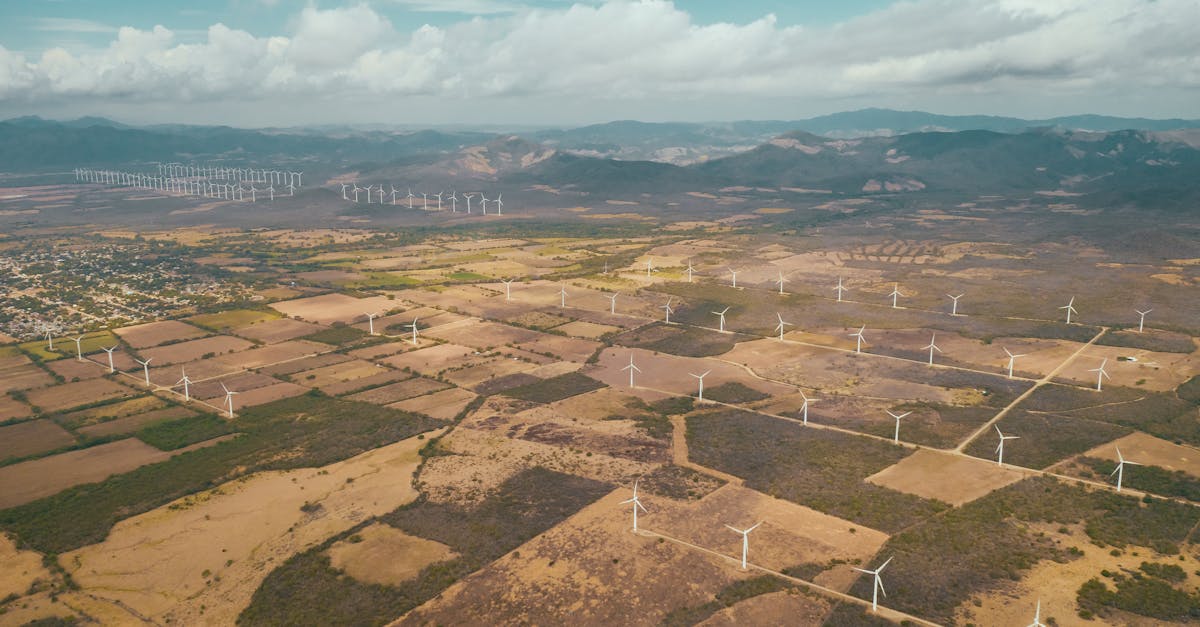
Yeltica’s disclosed anchor projects, not its 2GW target, will determine whether the platform is financeable. Photo: Mikhail Nilov / Pexels, Pexels licence (free commercial use).
The part most people miss is the difference between announced gigawatts and financeable gigawatts. Actis has put an anchor portfolio behind its strategy. Yet the brief does not disclose the project locations, expected commercial-operation dates, Actis’s equity commitment, or the intended split between equity, construction debt, equipment finance and later refinancing. Nor does it provide details of José Luis García’s experience beyond his appointment as Yeltica’s chief executive on 17 September 2026.
For founders, suppliers and investors, that missing detail is not a criticism. It is the diligence agenda for the next 90 days.
Why Mexico has changed since early 2026
Mexico’s first mixed-investment tender closed in June 2026. It awarded 7,411MW across 37 solar and wind projects, equal to 114% of the roughly 6,500MW sought. Mixed-investment contract signing began in June 2026, with a target of April 2027 for financial close. Financial close is the point at which project funding documents are completed and money can be drawn.
The policy framework matters. Mixed-Development Guidelines published on 28 January 2026 set out a structure requiring CFE to hold 54% equity and private participants 46%, alongside a standard contractual vehicle and financing model. This changes the opportunity from a conventional private developer seeking a bilateral route to market into one in which the state is structurally central to ownership, contracting and delivery.

CFE sits at the centre of Mexico’s new mixed-investment model as of 2026. Photo: Rogerleon / Wikimedia Commons, CC BY-SA 4.0.
Yeltica’s three awarded projects are therefore more than a single investor announcement. They are an early test of whether this new route can produce repeatable private investment returns.
The revenue side is encouraging. A 25-year PPA denominated in US dollars and indexed to inflation gives lenders and equity investors more visibility over project income than a short-term or uncontracted power sale. It also reduces currency and inflation risk relative to local-currency contracts. Mexico’s PLADESE plan for 2025 to 2030 targets 32GW of added capacity, including 22GW of renewables, with a goal of raising the renewable share to 38% by 2030 from about 26% in 2025.
Yet a PPA is not a complete answer. Chambers & Partners identified financing structure, land, permits, curtailment risk, storage costs, binding planning and CFE’s strategic preferences as material factors in Mexico in May and June 2026. Curtailment means a generator is told to reduce output even when it could produce electricity. For a solar-plus-storage project, that can affect the actual revenue available to service debt and pay investors.
This is why the private power market has not simply “reopened”. It has begun a live experiment in state-backed mixed investment. The outcome rests on execution.
GI Network's view: Yeltica should be treated as a project-finance test case, not a 2GW verdict. The 330MWp and 255MWh anchor portfolio has the strongest disclosed revenue foundation. The market now needs evidence that contracts, permits, interconnection and financing can move together before treating the wider platform target as investable capacity.
Who is affected, and where the opportunity sits
Developers, operators and suppliers
For Mexican developers, Yeltica creates a clearer signal that solar-plus-storage proposals can gain traction under the mixed-investment model. But developers seeking to partner with Yeltica or pursue comparable tenders should not lead with capacity alone. They need a project pack that shows land status, permitting progress, interconnection position, technology costs and the practical division of responsibility with CFE.
The immediate commercial openings are not limited to development equity. The platform could require construction lending, equipment finance and, once projects are operating, refinancing. Equipment finance means funding tied to the purchase of equipment rather than an unrestricted corporate loan. But these needs should not be presented as completed transactions: the brief does not disclose a capital structure, lenders or suppliers for Yeltica.
For battery-storage providers, the 255MWh figure is the most tangible early demand signal. Storage may strengthen a project’s role in the system, but it also adds cost and delivery complexity. Suppliers should expect lenders and owners to focus closely on performance obligations, construction timing and the allocation of cost overruns.
For project sponsors outside Mexico, the message is relevant but not identical. In Chile, successful solar and storage auction bids in late 2025 and 2026 still faced delays from land-use disputes and transmission constraints. In India, ReNew Power financed wind projects won at record-low tariffs in early 2026, while many developers struggled with grid evacuation and late payments. A low tariff or an award can win a competition without creating a buildable project.
Equity investors
For infrastructure funds and strategic investors, Yeltica offers a route into Mexican energy infrastructure with an anchor offtaker and unusually long contracted revenues. The 25-year dollar-linked PPA structure may provide stronger protection against foreign-exchange pressure than India’s rupee-based contracts.
Still, investors should separate two questions. First: are the three anchor projects capable of reaching financial close? Second: can Actis repeat that process across the balance of its more-than-2GW ambition? The answer to the first question will shape the credibility of the second.
The investment committee issue is not whether the Mexican pipeline is large. It plainly is, given the 7,411MW awarded in June 2026. It is whether each project has a credible route through land, permits, grid connection, contractual conditions and funding. This is the discipline behind funding the proof rather than the fantasy.
Lenders and other capital providers
For lenders, the PPA terms are a starting point rather than a credit conclusion. The major questions are whether CFE’s contract terms provide usable payment certainty; whether grid and permitting conditions are sufficiently advanced; how storage costs are managed; and whether construction risk sits with parties able to absorb it.
The financing structure also matters because the mixed-investment model mandates a 54% CFE and 46% private equity position under the January 2026 guidelines. Lenders will need to understand the rights, obligations and decision-making that follow from that ownership design. A state presence can reduce some risks, but it can also add process and governance questions.
Long-term refinancing should be assessed early rather than assumed. Construction funding and operating-asset funding are not the same proposition. As our analysis of why refinancing can be narrower than it looks explains, a project can be built yet still face a constrained refinancing market if its evidence base or risk profile does not satisfy long-term capital.
The read-across from Mexico, India, Nigeria and Chile
Mexico has recent domestic precedent as well as international warnings.
Actis previously developed the Guajiro PV plant in Hidalgo, at about 129.5MWp, starting in 2019, and La Pimienta, a 300MW project with 444MWp of photovoltaic capacity, in 2022. Both had 15-year CFE PPAs. Their lesson is useful: local execution experience and operational PPAs matter. But previous success does not automatically clear today’s tighter planning environment or grid stress.

Actis’s earlier Mexican delivery record is useful precedent, but not a substitute for current grid and permit evidence. Photo: Diego Delso / Wikimedia Commons, CC BY-SA 4.0.
Polaris Renewable Energy and Cubico Sustainable Investments were also awarded projects in Mexico’s first mixed-investment tender in June 2026. Their contracts began signing in June 2026 and were aiming for financial close by April 2027. Their path reinforces the point that tender success is an early milestone. The real evidence will be whether the projects reach close with executable permits and interconnection arrangements.
India shows the risk of treating a competitively priced auction win as a financing outcome. ReNew Power’s wind projects, financed after record-low tariff auctions in early 2026, faced the wider problems of weak grid evacuation and late payments. Mexico’s dollar, inflation-indexed PPA structure may be more protective on currency and inflation. It cannot compensate for an unavailable grid.
Nigeria’s Lekki Deep Sea Port is not an energy project, but it is a useful infrastructure parallel. Its concession was signed in 2015, construction ran from 2018 to 2022, and operations began in 2023. Lagos State support and land concession arrangements helped reduce lender risk. Yet regulatory delays and foreign-exchange volatility still affected delivery. State involvement can make financing possible. It does not make execution automatic.

Lekki shows how state backing can reduce risk without eliminating regulatory and foreign-exchange execution challenges. Photo: FrankvEck / Wikimedia Commons, CC BY-SA 4.0.
Chile adds a final reminder. Solar and storage developers with successful auction bids in late 2025 and 2026 encountered transmission and land-use constraints. Across Mexico, India, Nigeria and Chile, the common lesson is simple: contracts and awards matter, but infrastructure must still be capable of being built and operated.
What businesses should do by December 2026
Businesses looking to sell, develop or co-invest around Yeltica and comparable Mexican mixed-investment projects should take five practical steps.
First, build a project-by-project evidence room. It should distinguish what is awarded from what is permitted, what is interconnected from what is merely proposed, and what is contracted from what is aspirational. Do not let a platform-wide 2GW number stand in for asset-level evidence.
Second, map each material risk to a named party. Land, grid access, construction delays, battery performance, curtailment and payment timing should each have a contractual answer. This is central to raising capital for a solar project by selling certainty.
Third, prepare two funding cases: one for construction and one for operating assets. The first must address completion and equipment risks. The second must show stable contracted revenues, actual generation and operating evidence.
Fourth, engage early with the parties that will assess bankability, not only those that can provide equity. That includes lenders, equipment providers and potential refinancing capital. Their questions can reveal defects before documents are signed.
Finally, use the April 2027 financial-close target as a working deadline. The intervening months should be used to turn tender status into documented deliverability.
What investors should do by December 2026
Investors should request the exact status of the three Yeltica anchor projects: contract execution, permits, land, interconnection, storage procurement, development timetable and funding plan. Where details are unavailable, that should be recorded as an underwriting gap, not filled with the platform’s wider ambition.
They should also test the CFE PPA beyond its headline duration and currency. The relevant issue is how payment, delivery, curtailment and other risks are allocated in the actual project documents.
Next, compare the investment case against Polaris and Cubico’s progress toward April 2027. If several mixed-investment projects move from awards to signed contracts and financial close, the model becomes more credible as a repeatable route. If they stall at permits or interconnection, the market should reassess the value of tender awards.
Finally, investors should ask whether a later refinancing case has been developed at the outset. Long-term contracted revenue can support that discussion, but only if operating and contractual evidence is robust enough when the time comes.
How GI Network works on this opportunity
GI Network can help a developer, supplier or investor turn a Mexican mixed-investment opportunity into an investor-ready decision file. In practice, that means organising the evidence behind the awarded asset, identifying the unresolved financing conditions, mapping the likely capital needs from construction through operating-stage refinancing, and preparing a clear materials set for relevant capital providers. The purpose is not to market a headline capacity number. It is to make the project’s contracted revenues, delivery dependencies and risk allocation understandable before capital is asked to commit.
What to watch next
- By December 2026: further disclosure from Actis or Yeltica on the three projects’ locations, permits, grid status, timetable and funding approach would strengthen the case that the anchor portfolio can move beyond award stage.
- By December 2026: evidence that CFE’s 25-year, US-dollar, inflation-indexed PPA structure is being implemented consistently across mixed-investment contracts would support lender confidence.
- By April 2027: financial close for contracts signed from June 2026, including projects awarded to Polaris Renewable Energy and Cubico Sustainable Investments, would be the clearest market-wide validation signal.
- By April 2027: delays tied to permits, land or interconnection would confirm that headline award volumes are running ahead of delivery capacity.
- Through 2030: progress towards PLADESE’s target of 32GW of additions, including 22GW of renewables, will show whether Mexico’s policy ambition is matched by deployable infrastructure.
- Actis launches Yeltica Energy, a new greenfield Mexican renewables platform anchored by solar PV and battery storage tender award · Actis · 17 September 2026
- Renewable Energy 2026: Mexico · Chambers & Partners · May–June 2026
- Mixed-Development Guidelines · Von Wobeser y Sierra · 28 January 2026
- Actis crea Yeltica Energy, una plataforma renovable que apunta a superar en México los 2 GW de solar, eólica y almacenamiento · pv magazine México · 17 September 2026
- Plan Mexico seeks PPPs to power infrastructure build-out · Actis · 2026
- Actis launches Yeltica Energy, a new greenfield Mexican renewables platform anchored by solar PV and battery storage tender award - Actis
- Renewable Energy 2026 - Mexico | Global Practice Guides | Chambers and Partners
- Alberto Estefan coverage in Infrastructure Investor: Plan Mexico seeks PPPs to power infra build-out - Actis
- Actis crea Yeltica Energy, una plataforma renovable que apunta a superar en México los 2 GW de solar, eólica y almacenamiento - pv magazine México
Raising capital? Open a capital file and let the advisory team assess your position.
Apply for Capital