
Recent financings in West Africa, India and Egypt show lenders using more than a headline coverage ratio to determine debt capacity. Sponsors need to test a stack of constraints before circulating models, because the DSCR-supported amount may not be the amount a lender will provide.
- ·A 1.55x base-case DSCR did not settle the West Africa light-rail debt case; LLCR, reserves and covenant triggers also shaped it.
- ·Reserve accounts can reduce usable debt capacity because they require cash to be set aside from the outset.
- ·Sunsure Energy’s July 2026 financing shows that security and layered instruments can matter where public DSCR disclosure does not.
- ·Minya Solar + BESS underlines that secured lending and revenue quality can carry more weight than a published DSCR.
- ·As ECAs take a larger role in long-tenor emerging-market infrastructure lending, their counterparty and revenue-convertibility tests can become the real debt limit.
- ·In the next 90 days, sponsors should identify the first constraint that breaks their model, not merely the highest debt amount a DSCR formula produces.
The number that looked decisive is no longer enough
On 21 July 2026, Sunsure Energy announced a ₹262 crore, about US$32 million, FMO-led project financing in India’s group captive commercial and industrial renewable sector, using secured non-convertible debentures and a term loan. Fifteen days earlier, on 6 July 2026, EAAIF committed a US$30 million senior secured corporate loan to Hassan Allam Utilities for Egypt’s Minya Solar + BESS expansion. And a West Africa light-rail public-private partnership case published on 3 June 2026 showed a base-case DSCR, or debt service coverage ratio, of 1.55x, yet also required a 1.45x LLCR floor, six months of debt-service reserves and several lock-up triggers. The message across these transactions is clear: meeting a headline DSCR does not automatically unlock more debt.
The common sponsor approach is familiar. Set a target DSCR, choose a repayment tenor, calculate debt capacity, then adjust repayments around the result. That remains a useful first pass. It is not, however, how lenders appear to be deciding the final amount in recent cross-border emerging-market financings.
The part most people miss is that a ratio does not judge the quality, convertibility or resilience of the cash flow underneath it. Two projects can show the same base-case DSCR and still receive radically different lender reactions if one has availability-based, USD-indexed revenue and the other has weaker contracted income, more uncertainty around counterparties, or greater need for liquidity reserves.
GI Network's view: Treat DSCR as the first screen, not the final answer. The real debt amount is set by the first element of the lender’s credit case that fails: cash-flow quality, downside resilience, reserve funding, asset-life coverage, repayment shape or a leverage cap.
Why the debt-sizing conversation has changed
The IDFG report published on 30 January 2026 said export credit agencies, or ECAs, from Japan, Korea, the UK, China, Italy and Germany underwrote US$60 billion to US$80 billion of emerging-market infrastructure in 2025. Its central implication is not simply that there is more capital available. It is that the institutions supplying long-tenor funding are applying multi-part tests.
Those tests include reserve requirements, convertible revenue criteria, counterparty haircuts and tenor criteria. A haircut is a lender’s decision to count less than the full stated value of forecast revenue. So the nominal revenue in a sponsor model may not be the revenue recognised in a lender model.
That changes the answer to a common question: how should debt be sized from target DSCR and tenor? Start there, but do not stop there. Calculate the debt that the lender’s accepted cash flow can support at the target DSCR over the proposed tenor. Then run the same debt through required reserves, downside tests, asset-life coverage and any debt-to-capital or gearing limits. Gearing simply means debt as a share of the project’s capital.
If reserve funding consumes cash, a project can meet the headline DSCR and still have less cash available for debt repayment or distributions. If the lender shortens the tenor, annual repayment rises and debt capacity falls. If the lender applies a more severe downside case, the amount that survives that case may be lower still.
This is why the debate about whether DSCR or debt-to-capital is the constraint has no universal answer. They are both part of a constraint stack. The binding constraint is whichever produces the lowest acceptable debt amount for that particular lender and transaction.
For sponsors, this is also a warning against relying on a single repayment percentage in every period. In project finance, repayment can be shaped to follow expected cash flow through sculpted amortisation, meaning scheduled principal repayment varies by period rather than remaining flat. But sculpting cannot cure weak revenue quality, inadequate reserves or a binding LLCR floor.
West Africa: a 1.55x DSCR was only one part of the deal
The West Africa light-rail PPP case, published on 3 June 2026, is the clearest disclosed illustration. It involved an urban transport concession with availability-based, USD-indexed revenue. Its base-case DSCR was 1.55x. Under a 15% operating-cost stress, DSCR fell to 1.28x. The deal also had a 1.45x LLCR, or loan-life coverage ratio, floor. LLCR measures the coverage of outstanding debt over the remaining life of the loan, rather than only the next payment period.
The financing had a 15-year tenor and sculpted amortisation. It also required a six-month DSRA, or debt service reserve account, alongside major-maintenance and operations-and-maintenance reserves. Equity was locked until DSCR exceeded 1.35x. A cash sweep began at 1.40x, meaning surplus cash had to be directed to debt repayment. The distribution lock was at 1.35x, while default was set below 1.15x DSCR.
That is not a deal in which the 1.55x figure can be read as a simple invitation to add leverage. It is a deal built around what happens when performance worsens, reserves are needed and cash cannot leave the project.

Its 1.55x base-case DSCR sat inside a wider package of reserves, LLCR tests and cash-flow restrictions. Photo: Andre Carrotflower / Wikimedia Commons, Public domain.
The lesson is practical. A DSCR-only model might show an attractive debt amount. A lender model must also demonstrate whether the project can maintain coverage after the reserve accounts are funded, after operating costs rise by 15%, and while lock-ups restrict equity distributions. The reported case does not disclose the leverage amount, so it cannot prove a specific debt-capacity gap. It does prove that the lender’s decision framework went well beyond DSCR.
India and Egypt: structure can do work that a ratio cannot
Sunsure Energy’s 21 July 2026 transaction offers a different lesson. The public materials do not disclose its DSCR. That absence matters. It means no one should claim that the financing proves a particular coverage threshold or leverage level. What is disclosed is the structure: secured non-convertible debentures and a term loan in the first FMO-led project financing for India’s group captive commercial and industrial renewable sector.
The reasonable read is not that DSCR was irrelevant. It is that security and tranche layering were central parts of the lender proposition. Tranche layering means using different debt instruments or layers with different protections and claims. A structure can create lending capacity that a simple, single-instrument cash-flow model may not show.

The July 2026 financing shows how secured and layered instruments can be part of the lending answer. Photo: Sharath G. / Pexels, Pexels licence (free commercial use).
For Indian commercial and industrial renewable sponsors, the implication is to bring the proposed instrument package into the debt-sizing conversation early. Do not present an operating model and treat security as a legal detail to settle later. If a lender needs secured debt and a layered package, those terms are part of what makes the capital available.
Egypt’s Minya Solar + BESS points in the same direction, with a different legal form. On 6 July 2026, EAAIF committed a US$30 million senior secured corporate loan to Hassan Allam Utilities, supporting the expansion of Minya Solar + BESS, described as 1,000MW of solar and 660MWh of storage. It was an expansion of prior financing.
Public documents do not state DSCR for this financing either. That is a limit on what can be concluded. Still, the disclosed senior-secured corporate structure places security, asset quality and the quality of contracted revenue at the centre of the credit story. The deal is not evidence for ignoring DSCR. It is evidence against treating disclosure of DSCR as the sole proof of bankability.
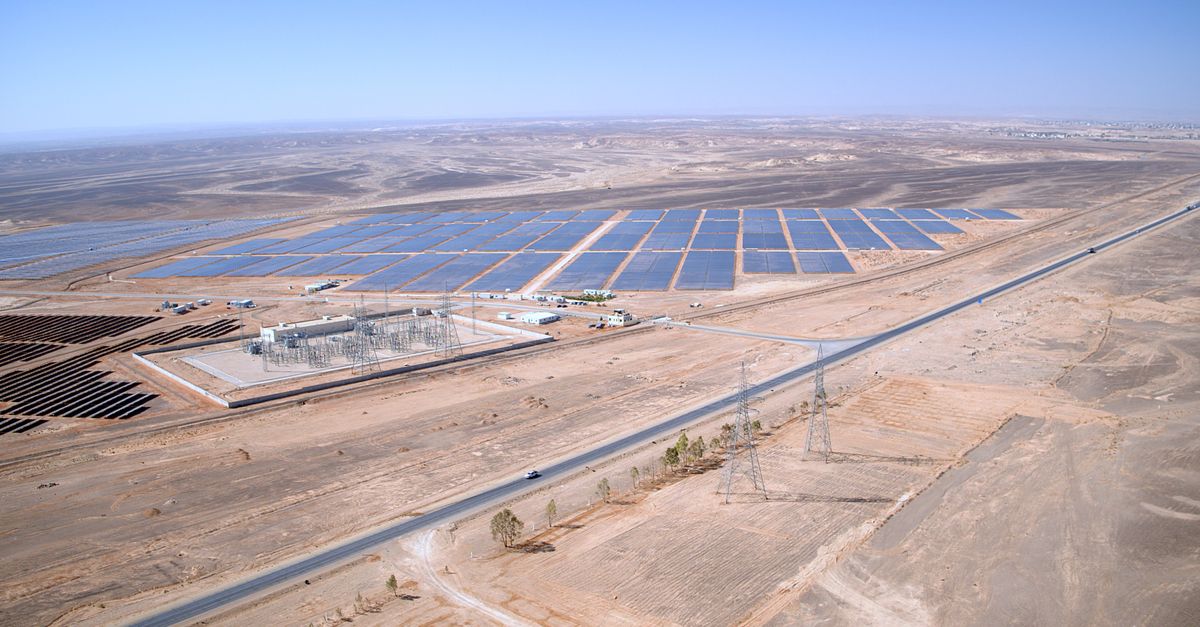
EAAIF’s US$30 million secured commitment highlights the weight lenders place on structure and asset-backed credit. Photo: Elements Interactive / Pexels, Pexels licence (free commercial use).
Across West Africa, India and North Africa, then, the shared pattern is not identical deal mechanics. It is the refusal of the latest disclosed structures to reduce credit judgement to one coverage ratio.
The read-across for founders, operators and capital providers
For founders and operators, the first task is to separate cash flow that looks good on paper from cash flow a lender will accept. Availability-based and tariff-indexed income may be treated differently from merchant revenue, which is revenue exposed to market sales rather than a contracted buyer. The research brief also points to stricter ECA attention to convertibility, counterparties and tenor. That means the source and terms of the revenue contract can influence debt capacity as much as the forecast amount.
This is especially relevant where sponsors are considering how to raise capital for a solar project: stop selling panels, sell certainty. The central job is to show certainty in the revenue, reserves and repayment case, not merely an attractive asset or high forecast output.
For investors, the risk is assuming that a model’s debt line is firm because the base DSCR clears an internal threshold. It may not be. A lender may later impose more reserve funding, apply counterparty haircuts, demand a different tenor, or restrict distributions through cash-sweep and lock-up terms. Those changes can alter equity returns even if the project reaches financial close.
The 2008-09 global financial crisis exposed the weakness of DSRA-equipped models where reserve sizing and covenant structure did not withstand stress. Emerging-market energy crises in Ghana and South Africa in the early 2010s similarly pushed lenders towards availability revenue and LLCR floors rather than DSCR alone. The current deals do not repeat those events. They show lenders retaining the lessons.
For lenders, the current ECA landscape raises a coordination issue. Sponsor models should show the credit case in a form that allows commercial lenders, DFIs and ECAs to compare their constraints. The lowest common denominator is not necessarily the interest rate. It may be revenue convertibility, a reserve requirement or a shorter acceptable tenor.
This is also why refinancing should not be assumed away. A project that is workable only because a future refinancing is expected may carry more risk than its opening DSCR suggests. GI Network has examined why the door marked ‘refinancing’ is narrower than it looks. The same discipline applies here: test the cash flow and capital structure that exist today, not only the one hoped for later.
What to do in the next 90 days
For businesses
Build a lender version of the model alongside the sponsor version. The lender version should show base case, downside case, accepted revenue, reserve funding, LLCR, debt-to-capital tests, repayment sculpting and distribution restrictions. Do not leave these to a late-stage term-sheet negotiation.
Run the West Africa-style exercise. Test the effect of a 15% operating-cost stress. Include six to 12 months of DSRA, maintenance reserves and operations-and-maintenance reserves, as proposed in the research brief. Identify which assumption first reduces debt capacity below the amount sought.
Prepare a covenant map. Set out the points at which distributions stop, surplus cash is swept to debt repayment and default occurs. This makes clear whether sponsor liquidity expectations are compatible with the financing structure.
Engage potential ECAs early, including JBIC, UKEF and Sinosure, where relevant. Their requirements may shape the procurement, revenue and tenor case before commercial terms are negotiated. For a practical starting point, read how ECA eligibility gets built before procurement closes.
GI Network reviews lender-facing materials before they are circulated to investment committees. In this situation, we can examine whether the debt case shows the full constraint stack, compare it with disclosed reserve and covenant structures, and identify the questions that lenders are likely to ask about revenue quality, downside coverage, security and tenor. Sponsors can Apply for Capital to obtain lender-ready debt-sizing feedback before their model reaches ICs.
For investors
Ask management for the binding-constraint schedule, not only the DSCR schedule. It should state the debt amount permitted by DSCR, LLCR, downside coverage, reserve funding and debt-to-capital limits, then identify the lowest result.
Request visibility on the security package and the order of claims between debt layers. The Sunsure transaction shows why the instrument structure can be material even where DSCR is not publicly disclosed.
Test distributions under the lender’s actual lock-up and cash-sweep triggers. Returns that look available in a base case may be trapped in the project during a stress period.
Finally, distinguish contracted revenue from revenue that is merely forecast. That distinction will matter more where ECAs or DFIs are involved and where revenue must satisfy convertibility and counterparty standards.
What to watch
- After 3 June 2026: any further disclosure from the West Africa light-rail PPP on the debt amount, leverage or detailed covenant calculation. It would show which constraint was ultimately binding.
- After 6 July 2026: documentation around EAAIF’s US$30 million Minya commitment that clarifies the security package, revenue structure or downside protections.
- After 21 July 2026: additional Sunsure Energy financing materials that identify how the secured NCD and term-loan layers divide risk and repayment.
- Following the 30 January 2026 IDFG report: evidence that ECA underwriting continues to favour stricter reserve, counterparty, convertibility and tenor criteria in new emerging-market infrastructure financings.
- Over the next 30-90 days: whether new term sheets treat DSCR as the stated headline threshold but use reserve funding, LLCR, downside coverage or gearing as the effective debt cap.
The useful mental model is simple. Size debt by DSCR first. Then assume that the amount is provisional until it survives the lender’s full stack of tests. In the current emerging-market market, that is where the real debt number is decided.
- N3 Case Studies Africa, May 2026 H1 Issue 06: Step-in Rights Mode · LinkedIn · 3 June 2026
- EAAIF bolsters Egypt’s energy resilience with US$30 million commitment to Hassan Allam Utilities for Minya · EAAIF · 6 July 2026
- Sunsure Energy FMO and Axis Bank Project Finance · The Courtroom · 21 July 2026
- Export Credit Agencies Reshaping Emerging-Market Project Finance · IDFG · 30 January 2026
- Project Finance, Holdco Finance and NAV Facilities in Energy: How the Capital Stack Fits Together · Jones Day · July 2026
- N3 CASE STUDIES ™ : Africa | May 2026 (H1) | Issue 06 Step-In Rights & HoldCo Governance Institutional Control Architecture
- DSK Legal And Khaitan & Co Advise On Sunsure Energy FMO Axis Bank Project Finance Of ₹262 Crore – The Courtroom
- EAAIF bolsters Egypt’s energy resilience with USD 30 million commitment to Hassan Allam Utilities for Minya, one of Africa’s largest solar and storage projects - Emerging Africa & Asia Infrastructure Fund
- Export Credit Agencies and the New Architecture of Emerging Market Project Finance | IDFG
- Project Finance, Holdco Finance and NAV Facilities in Energy: How the Capital Stack Fits Together | Insights | Jones Day
Apply for Capital to get lender-ready debt sizing feedback before you circulate your model to ICs.
Apply for Capital