
Small business grants usually pay for defined outcomes such as research, jobs, training, inclusion or local enterprise development. The practical task is to screen eligibility, timing, co-funding and reporting requirements before spending time on an application.
- ·A strong business idea alone is usually not enough for a small grant.
- ·The first question is what outcome the programme is buying, not how persuasive your pitch is.
- ·Training, matched money, a committed researcher or a group structure can be mandatory before an application is even considered.
- ·Grant size and grant usefulness are different: micro-grants can carry strict social, training and monitoring conditions.
- ·Apply only when your project, location, ownership and stage fit the published rules.
- ·For investors, grant eligibility can be useful evidence of execution discipline, but it is not the same as unrestricted capital.
How do people actually get small startup grants for a business idea?
People usually get a small startup grant by finding a programme built for the exact project they are doing, then proving that they meet its conditions before money is awarded. That normally means more than a good idea. The programme may require research and development, a particular location, a woman- or youth-led business, matching cash, training, a committed researcher, a group of founders, or a clear route to commercial scale. It may also require evidence that the business can deliver jobs, training or another public outcome.
The practical rule is simple: do not start with a generic list of grants. Start with the public result the funder is trying to buy. Then test your business against the eligibility rules, the application timetable, the required commitment and the reporting burden. If the match is weak, a polished application will not turn a general idea into an eligible project.
This is especially important for founders searching for manufacturing investment incentives. The evidence in this brief does not provide a current inventory of open manufacturing programmes, identify the best US states, or set out state-by-state tax terms. It does show the right way to approach any such incentive: distinguish a true grant from a tax incentive, reimbursement or loan; confirm the location and project requirements; and check timing before making commitments.
What does a startup grant actually pay for?
A grant is often described as non-repayable money. That is true in the narrow sense that it is not conventional debt. But it does not mean unrestricted money with no obligations. Most small-grant schemes in the evidence fund a defined activity or policy goal, not the founder’s idea in the abstract.
Think of it less like a prize for having an idea and more like a contract for delivering an agreed result. A funder may want more research, a scalable company, local enterprise activity, women’s or youth participation, training, or a business in a rural community. The grant is the payment mechanism for that outcome.
That is why the part most people miss is qualification. A founder can have a sensible local business and still be a poor fit for a programme designed to find high-growth companies capable of raising institutional capital. Equally, a founder with a promising technology may be unsuitable for a programme that requires a diaspora co-investor or a three-person enterprise group.
The US Small Business Innovation Research programme, known as SBIR, is a clear example. NSF SBIR is for project-stage research and development rather than an early concept. It requires a US-based company with fewer than 500 employees, majority US ownership, and a principal investigator who commits at least 173 hours over six months. The funded goods or services must use the money in the US.

NSF SBIR illustrates how research grants screen for ownership, location and committed project capacity. Photo: Kindel Media / Pexels, Pexels licence (free commercial use).
Those are not presentation preferences. They are hard operating conditions. Before writing an application, a founder must be able to answer whether the company’s ownership, location, staffing and research plan qualify.
What numbers matter when applying for a small business grant?
Grant amounts vary widely, but the better comparison is between the money offered and the commitment required.
WIDU.africa provides grants of €300 to €3,000 when the entrepreneur and diaspora partner co-invest €150 to €1,500. That is 50% co-funding. Subsequent applications can reach €5,000, but require a 1:1:1 match. In other words, the applicant is not simply asking for money. They are bringing money and a partner into a structured co-investment model.
As of July 2026, WIDU.africa had supported 7,909 enterprises, mobilised €12.6 million in private funding and provided €13.2 million in grants. It reported 18,920 jobs created. Those figures show why matching funds matter to the programme: they help it mobilise private capital alongside public grant money.
NC IDEA in North Carolina offers two different sizes of grant: MICRO at $10,000 and SEED at $50,000. It runs twice-yearly cycles. An applicant can submit one application per cycle and cannot receive both awards. Its selection criteria include innovation, scalability, a commercial pathway and the ability to raise venture capital.
That makes NC IDEA useful for a particular kind of startup, but not necessarily for every small business. A viable local company without a venture-style scale path may be commercially sound and still fall outside the fund’s purpose.
The Verizon Digital Ready Grant awards ten $10,000 grants each month on a rolling basis from June to December 2026. But applicants must first complete two free training events to unlock the application. The company must be for-profit and based in the US, Puerto Rico or the US Virgin Islands, and owners must be at least 18.

Verizon’s grant shows that completing required training can be as important as the application itself. Photo: Mmsass / Wikimedia Commons, CC BY-SA 4.0.
The amount is simple. The access route is not. A founder who notices the grant only when a selection month closes may be too late to complete the required preparation.
Do you have to apply before spending money or announcing a project?
Usually, timing should be treated as an eligibility issue, not an administrative detail. The wider incentive model described in this brief includes pre-application commitments and “but-for” timing. A but-for clause means the funder wants assurance that the project, investment or activity would not proceed in the same way without the incentive.
For a founder or small manufacturer, the safe working approach is to check timing before taking irreversible steps. That includes hiring, ordering equipment, beginning construction, spending programme-related money or publicly announcing a project where the programme rules make those actions relevant. The research brief does not provide a universal deadline, nor published manufacturing award agreements that set exact rules for each state or programme. Do not assume one programme’s timing applies to another.
Ask the programme administrator directly, in writing where possible: must we apply before we commit costs, hire staff, order equipment or start work? Is the support paid upfront, reimbursed after spending, or delivered through a tax mechanism? What evidence will we need to retain?
The same caution applies to benefits that are described as refundable, transferable or capped. Those are different legal and financial features. The available evidence does not establish standard terms across manufacturing incentives, so founders should not treat any of them as assumed. They need to read the applicable programme terms.
What do real small-grant programmes show?
WIDU.africa operates across ten African countries, including Ghana and Kenya. Its model requires the local entrepreneur and a member of the diaspora to co-invest before matched grant money is provided. The lesson is direct: the programme uses matching capital to test commitment and mobilise more funding. It is not paying someone merely to explore a business idea.
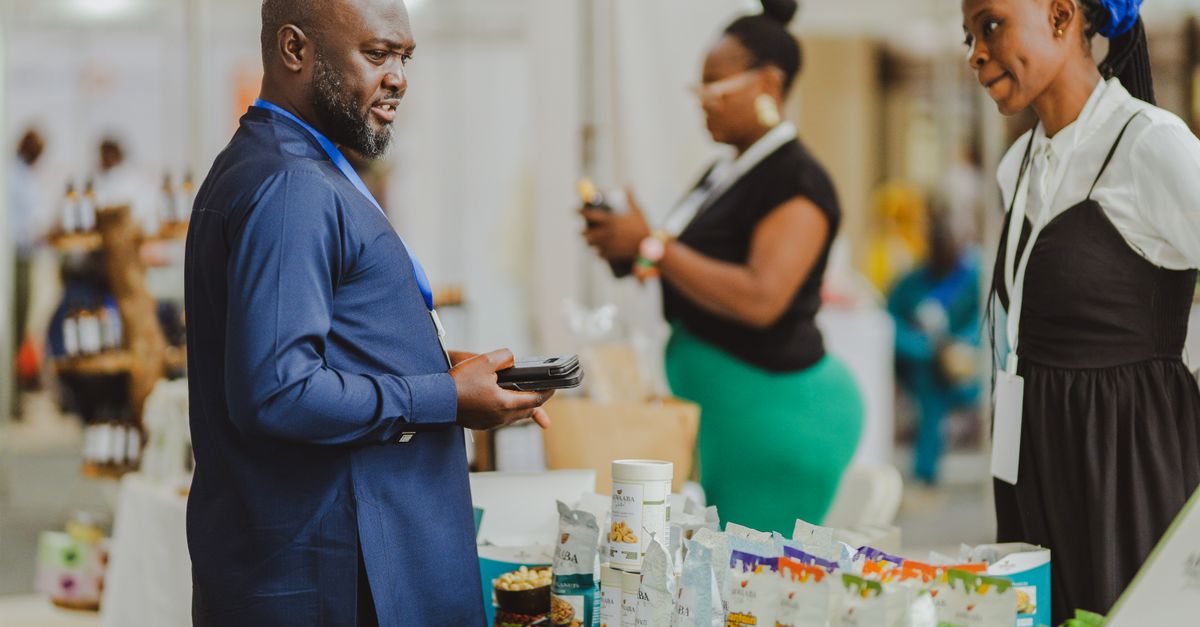
WIDU.africa uses matched diaspora and entrepreneur funding to turn grants into a commitment test. Photo: Wo Nfoni Media / Pexels, Pexels licence (free commercial use).
NSF SBIR shows a different mechanism. It screens for research capacity, ownership, US operations and the time commitment of a principal investigator. A founder who has not reached a genuine R&D project stage is unlikely to become eligible through a better narrative alone.
NC IDEA demonstrates that some grants select for investability as much as need. Its MICRO and SEED awards are for businesses that can show innovation, scalability, commercial potential and an ability to raise venture capital. This can be valuable validation for a suitable startup, but it is not broad support for every early business.
Verizon Digital Ready shows how preparation itself can be part of the award design. Completing two training events is mandatory before an applicant can access the grant application. The programme is rewarding readiness and participation, not just judging a written proposal.
US African Development Foundation, or USADF, offers grants of up to $250,000 to early-stage agriculture, energy, youth-led and women-led enterprises in sub-Saharan Africa through a community development model. It made 253 new grants in 2020. Its sector, location and inclusion criteria underline a basic rule: grant capital is not equally available to all businesses.
Village Enterprise takes the logic further at the micro-grant level. It offers US$180 to US$300 seed grants to groups of three entrepreneurs in rural Africa, alongside mentoring and savings groups. The funding is tied to a group model and social outcomes. A small grant can therefore be more structured, not less structured, than a larger commercial financing round.
How do grants vary by country, company stage and business type?
In the United States, the examples are tightly filtered by company stage, commercial potential, research activity and participation requirements. NSF SBIR is for qualifying US research and development companies. NC IDEA targets scalable North Carolina startups. Verizon’s programme requires training before application.
Across the African examples, the emphasis shifts towards matched capital, local inclusion, rural enterprise, group delivery and mentoring. WIDU.africa uses diaspora and entrepreneur co-investment. USADF targets sectors and leadership groups. Village Enterprise combines small amounts of money with structured support.
European evidence in the brief points to another route: grants can outperform tax incentives for young firms’ employment growth in Italian research examined by Colombo and colleagues. Cascade Funding can simplify access through intermediaries, but remains focused on specific innovation clusters rather than general business ideas.
For manufacturing investment incentives, location can therefore change the mechanism as well as the amount. Some programmes may be grants, while others are tax incentives, loans or reimbursements. The evidence supplied here does not rank US states or count currently open manufacturer programmes. The defensible answer is that eligibility will vary by location, project type, business stage and the outcome the programme is designed to produce.
What is the wrong answer people give about startup grants?
The wrong answer is: “Find a grant list, tell a convincing story and get free money.”
That approach wastes time because it puts the idea before the rules. Grants are commonly mission-specific and condition-led. They often exclude preliminary concepts without evidence of readiness or alignment. The key evidence may be co-investment, completed training, an eligible company structure, a committed researcher, a group model or a measurable economic and social outcome.
Another wrong answer is to call every public incentive a grant. A grant, tax incentive, loan and reimbursement create different cash-flow, compliance and risk positions. Before relying on an incentive in a budget, establish what it is, when it is received, what it requires and what happens if performance falls short.
What should a founder do before applying for a startup grant?
First, write down the project in one sentence: what will be done, where, by whom and what result will it produce? Then identify the programme’s objective and compare it line by line with your project.
Second, create a basic eligibility checklist. Include company location, ownership, employee count, sector, founder profile, project stage, required matching funds, training, staffing and application cycle. If one hard condition fails, stop before investing in a long application.
Third, map the timing. Ask whether you must apply before expenditure, hiring, ordering equipment, construction or announcement. Keep a record of the answer. Then calculate whether the grant justifies the commitments, reporting and monitoring it requires.
Fourth, prepare evidence rather than rhetoric. For a research grant, that may mean a credible project plan and researcher capacity. For a match-funded programme, it means documented co-investment. For a scale-focused programme, it means a plausible commercial path. The same discipline that improves a grant application improves an investor pitch deck.
For investors, grant funding should be read as conditional capital. It may reduce financing needs and demonstrate a company’s ability to execute against external criteria. But investors should ask whether the terms restrict use of funds, require future performance, or create a risk of repayment or loss of benefit. The operational question is similar to underwriting workforce risk before talent constrains capex: can the company actually deliver the commitments assumed in the plan?
GI Network’s view: Treat a grant search as a structured capital-readiness exercise. GI Network can help a founder turn programme rules into an eligibility matrix, separate cash grants from tax-linked or reimbursement-style support, test the project timeline against application conditions, and present the resulting funding plan clearly to prospective capital providers.
Which states have the best manufacturing tax incentives?
The supplied evidence does not support a ranking of US states or identify current manufacturing tax incentives by state. Rankings can also mislead because the useful programme depends on the company’s location, project, employment plans, investment timing and ability to meet conditions.
A manufacturer should compare the actual terms available for its proposed site, not rely on a broad state league table. Confirm whether the benefit is a grant, tax incentive, loan or reimbursement, and whether it is available before commitments are made.
How many funding programmes are open to US manufacturers?
This brief does not provide a current count of open federal, state, local, utility or industry programmes for US manufacturers. A count would change over time and would not tell a company whether it is eligible.
The better question is which programmes fit the specific facility, investment, workforce and timing plan. Start with eligibility and programme conditions, then build a shortlist of real opportunities.
What minimum investment, jobs or wage commitments apply?
No universal minimum applies across grants and incentives. The examples in this brief show that conditions can take very different forms: co-investment in WIDU.africa, principal investigator time in NSF SBIR, training completion in Verizon Digital Ready, and scale potential in NC IDEA.
For any individual programme, use its published rules or award terms to establish the required investment, jobs, wages, training or production outcomes. Do not infer those requirements from a different programme or jurisdiction.
How long must a business maintain jobs or investment after receiving support?
The research brief establishes that grants can involve measurable performance and reporting obligations, but it does not provide standard maintenance periods. These terms may determine whether a benefit is retained, reduced or recovered.
Before accepting an award, ask for the reporting schedule, audit rights, maintenance period and any recapture or clawback provisions. A clawback is a requirement to repay support if agreed conditions are not met.
When should we start the grant or incentive process?
Start before you make project decisions that may affect eligibility. This is particularly important where a programme uses a but-for test or requires an application before costs are committed.
In practical terms, screen incentives while the project location, scope and spending plan can still be shaped. Waiting until after a major commitment can turn a potential opportunity into an ineligible one.
Must the company apply before announcing, hiring, ordering equipment or beginning construction?
Often, yes. Timing can be an eligibility condition because funders may require proof that the project would not proceed in the same way without support. Before hiring, ordering equipment, starting construction, spending programme-related money or publicly announcing a project, check the specific rules. Ask the programme administrator in writing whether those actions must wait until after application or approval.
What is the "but for" clause and why does it matter?
A but-for clause means the funder wants assurance that, but for the incentive, the project, investment or activity would not proceed in the same way. It matters because commitments made before applying, such as hiring staff, ordering equipment or starting work, may undermine that case. The exact rule varies by programme, so applicants should confirm timing requirements directly.
How do incentives vary by location?
Incentives vary sharply by country, state, region and programme purpose. Eligibility may depend on where the business operates, its sector, company stage, ownership, research activity, rural location or target group. For example, NSF SBIR is for qualifying US R&D companies, while WIDU.africa operates in selected African countries and requires diaspora and local co-investment. A grant available in one location may not apply elsewhere.
When should we start the process?
Start before making irreversible project commitments. First identify the public outcome the funder is trying to achieve, then check location, company-stage, co-funding, training, staffing and reporting requirements. Confirm the application timetable and timing rules before spending money, hiring, ordering equipment or beginning construction. A strong application cannot overcome a basic mismatch with the programme’s eligibility conditions.
- Grants · US Small Business Administration · Not stated
- Get Started with NSF SBIR/STTR · NSF Seed Fund · Not stated
- Frequently Asked Questions · NC IDEA · Not stated
- Verizon Digital Ready Grant details · Verizon Digital Ready · 2026
- IYAB WIDU Support Platform · European Commission International Partnerships · July 2026
- R&D Grants and Employment Growth · European Commission Joint Research Centre · Not stated
- United States African Development Foundation · Wikipedia · 2020
- Village Enterprise · Wikipedia · Not stated
- Grants - Small Business Administration
- Small Business Grant Programs • VA Dept of Small Business
- IYBA WIDU – the support platform for micro and small enterprises in Africa in collaboration with the diaspora in Europe - European Commission
- How It Works - Get Started | NSF SBIR
- FREQUENTLY ASKED QUESTIONS - NC IDEA
- Verizon Small Business Digital Ready $10,000 national grant
- United States African Development Foundation
- Village Enterprise
Raising capital? Open a capital file and let the advisory team assess your position.
Apply for Capital