
A solar plant in Rajasthan had a 25-year fixed-tariff contract and still lost 12-18% of its output to curtailment. The lesson is that renewable energy curtailment risk, capture prices and dispatch control now matter more to lenders than headline capacity or equipment cost.
- ·A long-term PPA can protect a tariff while leaving the project exposed to unpaid lost generation.
- ·Grid connection is permission to connect, not a guarantee that power can be exported when it is most valuable.
- ·A project near a strong interconnection can be safer than a cheaper project in a congested solar zone.
- ·Storage can be a repair to a broken revenue model, not merely an optional source of upside.
- ·Lenders increasingly test stressed dispatch and realised revenue, rather than accepting generation forecasts at face value.
- ·The practical question is simple: who loses money when the grid says no?
In Rajasthan, a 20 MW solar plant had much of what an investor is taught to want.
Barmer Solar IPP had a 25-year power purchase agreement, or PPA, meaning a contract to sell electricity at an agreed price. Its tariff was fixed at ₹2.68 per kWh. Solar equipment was cheap. The project could produce power.
Then, during low-demand winter afternoons in 2024, the grid curtailed it. Curtailment is the instruction to reduce or stop generation even though the sun is shining and the plant is ready. Barmer lost 12-18% of annual generation and roughly ₹1.8 crore a year in foregone revenue.
That is about $220,000 which the project had expected to earn, and did not.
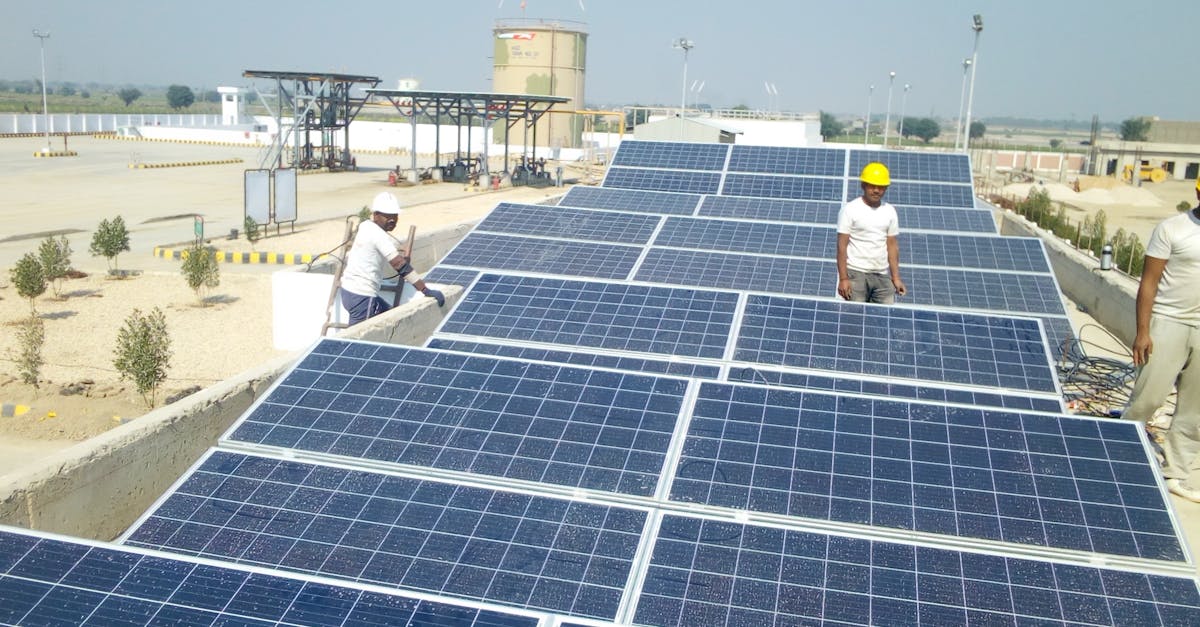
Barmer’s fixed-tariff contract did not protect revenue when the grid curtailed output. Photo: Nadeem Jafar / Pexels, Pexels licence (free commercial use).
The PPA did not compensate the plant for curtailed energy. So the fixed tariff, the figure that looked so reassuring in a presentation, applied only to electricity the project was permitted to deliver.
Barmer’s answer was expensive but revealing: a co-located 10 MWh/5 MW battery energy storage system, or BESS, paired with AI dispatch to move output towards evening peaks. According to the TESAS case study, that recovered the lost revenue and eliminated curtailment.
The story raises an awkward question. What exactly did Barmer own before the battery arrived: a dependable electricity business, or an efficient machine for making power at the precise hours the grid least wanted it?
The comforting number that leaves out the hard part
The usual shorthand for renewable competitiveness is LCOE, or levelised cost of energy: the estimated average cost of producing a unit of electricity over a project’s life. It is useful. It tells us whether panels, turbines, construction and financing have become cheaper.
It does not tell us whether electricity can leave the site, what price it earns when it does, or who pays when the system refuses it.
That distinction sounds pedantic until debt is involved. A lender does not get repaid by a plant’s theoretical output. It gets repaid from cash arriving in the project account.
At first glance, a fixed-price PPA appears to settle the question. But a contract can preserve a nominal tariff and still offer no payment for volumes the grid orders off. The project has a price, certainly. It may not have revenue.
This is where most people stop looking. They see a low generation cost, a connection agreement and a buyer. Yet there is an entire chain between sunlight and cash: generate, connect, export, price, balance and settle. A failure at any link can turn a handsome model into a very awkward conversation with lenders.
GI Network's view: The bankable renewable asset is no longer simply the one that produces the cheapest power. It is the one that can prove who bears the loss when cheap power arrives at the wrong place, at the wrong time.

Rajasthan. Photo: Bkwcreator / Wikimedia Commons, CC BY-SA 3.0.
A connection is not an exit
In April 2026, assessments of the South-East Europe Grid found lenders changing what they asked developers to prove. The question was no longer simply how much a solar plant could generate. It was whether it could export to liquid markets when network conditions changed.
The contrast is sharp. Solar projects near the Serbia-Hungary border faced capture-price discounts of €2-5/MWh and curtailment below 3-5%. Capture price means the average price actually earned by a generator, rather than the market’s broad average price. In solar-heavy zones, curtailment risk reached 15-25%.
Same technology. Different place in the network. Radically different exposure.

Export access near this interconnection produced lower curtailment exposure than solar-heavy zones. Photo: Chmee2/Valtameri / Wikimedia Commons, CC BY 3.0.
This overturns a familiar assumption. Developers often treat grid connection as a finish line: secure the right to plug in, then build. In practice, connection can be only the first gate. The more valuable question is whether the connection leads towards a route capable of carrying power to buyers when renewable output is high.
The interesting part is that a higher-cost site near a strong interconnection may be more financeable than a lower-cost site surrounded by competing solar generation. Its panels may not be better. Its route to cash is.
That is also why negative power prices deserve more attention than they usually receive. A negative price means a generator may effectively pay to put electricity into the system. The evidence in this brief does not establish the frequency of negative-price hours in these markets, but it makes the underlying point clear: an electricity price is not a permanent property of a project. It depends on when and where the project is trying to sell.
The risk is not always at the plant
The Barmer case looks like a plant-level failure. Too much solar output met too little afternoon demand, and the project was constrained. But another case shows why the problem can begin much further upstream.
EPE Utility Advisory worked with a national transmission owner in an unnamed semi-arid country facing rapid wind and solar growth. The transmission owner, the organisation responsible for moving electricity across the high-voltage network, had limited visibility and inefficient forecasting. Curtailment grew. So did its financial exposure under PPAs, including payments associated with energy that was never delivered.
Its response was not to hunt for better wind or sunnier land. It built centralised forecasting, modelled unit commitment and security constraints, quantified curtailment, reviewed PPA exposure and created a storage roadmap. The result was reduced curtailment and exposure, improved dispatch efficiency and stronger grid reliability, according to EPE.
Put the Rajasthan, South-East Europe and semi-arid cases side by side and a pattern appears that none of the reports says quite so bluntly: renewable risk is migrating from the equipment to the choreography.
The panel or turbine is only one player. The grid operator forecasts. The network carries. The buyer pays. A battery stores or releases. The PPA assigns losses. If those decisions are uncoordinated, a technically excellent plant can be commercially fragile.
This is also why asking whether curtailed electricity should simply be used for crypto mining misses the prior question. The available evidence does not show crypto mining solving these cases. Curtailment may arise from network reliability, scheduling or the inability to move power through a constrained system. An alternative user would need to be physically able to consume the electricity at the constrained location and time, under the relevant dispatch and connection rules. A power-hungry customer somewhere else does not repair a blocked wire.
The clause nobody celebrates
Fitch Ratings has made the credit implication unusually plain. Its renewable-energy project criteria warn that projects without curtailment protection in their PPAs, or a regulatory mechanism that compensates curtailment, face elevated bankability risk even where generation and connection agreements exist. Curtailment above expected levels can lead to rating downgrades.
That is a useful corrective to the phrase “priority dispatch”. Priority may sound absolute. It is not a substitute for reading the grid code, the interconnection agreement and the PPA together.
A developer should know under what circumstances priority dispatch can be overridden, whether the grid operator distinguishes reliability curtailment from economic curtailment, and whether compensation changes with the reason. Reliability curtailment concerns the system’s ability to operate safely. Economic curtailment concerns dispatch choices and market conditions. The commercial answer may differ sharply depending on which label applies.
Aurevant Partners, which advises on renewable bankability, frames the modern lender test as revenue durability. Lenders scrutinise stressed dispatch conditions, capture-price discounts, curtailment, the merchant tail, grid deliverability, balancing costs and the buyer’s credit quality. A merchant tail is the period in which the project sells into the market without contracted pricing.
None of that means a PPA is unimportant. It means the headline PPA price is not the asset.
The asset is the set of enforceable cash flows after the grid has had its say.
When the battery is not a bonus
Storage is often presented as a pleasant extra: another revenue stream, a way to chase evening prices, a glossy line in an investor deck. Barmer tells a tougher story.
Its battery was a corrective investment. The project’s original revenue profile had been damaged because output arrived when demand was low and curtailment was high. The battery and AI dispatch shifted power into evening peaks, restoring what the fixed-tariff PPA had not protected.
That does not mean every congested solar project needs a battery. The evidence here cannot prove that. A site with modest curtailment, good export access and contractual compensation may not require one. Nor does a battery automatically solve the problem if someone else controls its dispatch, its revenues or its charging rights.
Here is the twist: in a congested grid, a battery’s most important value may not be the electricity it sells. It may be the revenue it prevents the solar plant from losing.
That changes the diligence. Do not ask only, “How much can storage earn?” Ask, “Who decides when it charges and discharges, and does that decision protect the generation asset’s cash flow?”
What builders should model before they build
For founders, developers and operators, the practical work begins before investor outreach, not after the first curtailment notice.
First, test the exact connection point during minimum-demand and maximum-renewable-output periods. Historical curtailment data for similar plants in the same grid region is more useful than broad national capacity figures. If that data is unavailable, treat the absence itself as a risk to be priced, not a blank cell to be ignored.
Second, build the model around delivered energy and realised revenue, not installed capacity. Show what happens if curtailment reaches the range seen in comparable congested areas. Show what happens if capture prices weaken. Show which costs rise when balancing obligations change.
Third, make curtailment allocation explicit in the PPA. Is lost output compensated? Does the answer depend on whether curtailment is driven by reliability or economics? Is the buyer creditworthy enough to meet its obligations when the system is stressed?
Fourth, clarify storage control. A co-located battery can transform a project, as Barmer demonstrates, but only if its dispatch arrangement permits the project to preserve or improve its own revenues.
This is a cousin of the problem explored in Why lenders discount the subsidies governments celebrate: a benefit on paper is not the same as cash that can be relied upon. It also explains why a data room can be almost complete while financing remains elusive, as in The data room was 95% done. The lenders still would not fund..
What experienced investors see first
Investors are not being fussy when they discount unprotected curtailment. They are asking a basic psychological question: what has to go right, every day, for this forecast to be true?
A first-time sponsor may see 20 MW and a 25-year tariff. An experienced credit team sees several separate promises. The plant must generate. The grid must accept output. The network must carry it. The price must hold up. The buyer must pay. The contracts must assign disruption to someone with the capacity and obligation to absorb it.
Their concern is not merely lower returns. It is fragility. If revenue falls when the grid is constrained, there may be less cash available for debt service precisely when the project cannot easily fix its position.
Smart investors therefore compare the project against local operating reality. They ask for comparable curtailment outcomes, not just resource studies. They test whether a supposedly firm PPA pays for unavailable export. They examine the grid-code exceptions to priority dispatch. And they want the revenue case rerun under stress, including the period after contractual pricing ends.
The deepest mistake is to confuse a generation forecast with a cash-flow forecast. They are related. They are not interchangeable.
GI Network would approach this particular financing problem by mapping the project’s energy-to-cash chain before approaching capital: testing connection-point exposure, reviewing curtailment and compensation clauses, checking storage dispatch control, rebuilding revenue under stressed export conditions and preparing direct answers to the objections an investment committee will raise. Only then would GI Network map suitable debt, equity or blended-capital providers around the risk the project can actually support.
Use the Six-Gate test
Before calling a renewable project bankable, run the Six-Gate test. A megawatt becomes dependable revenue only if it passes all six gates:
- 1.Generate: Can the plant produce the forecast energy?
- 2.Connect: Does it have a valid route into the network?
- 3.Export: Can that route carry output during low demand and high renewable production?
- 4.Price: What does the project actually earn at the hours it generates?
- 5.Protect: Who pays when curtailment occurs, and does the answer change by cause?
- 6.Control: Who controls storage, balancing and dispatch when the grid is under pressure?
If one gate is uncertain, capacity is not cash flow. It is a hope with a cable attached.
What is curtailment in electricity?
Curtailment is an instruction from the grid to reduce or stop electricity generation even when a power plant is able to produce. It can occur when demand is low, renewable output is high, or network conditions limit safe transmission. For a renewable project, curtailed electricity may mean lost sales unless its contract or regulations provide compensation.
What is renewable energy curtailment risk?
Renewable energy curtailment risk is the chance that a solar or wind project cannot export all of its available electricity because of grid congestion, low demand, dispatch decisions or reliability constraints. It reduces realised generation and revenue. The risk can be especially significant in solar-heavy areas where many plants produce at the same time.
How do the economics work?
A renewable project earns revenue only from electricity it is allowed to deliver and is paid for, not from its theoretical output. A fixed-price PPA sets a tariff, but may not compensate curtailed volumes. Project economics therefore depend on export access, capture prices, balancing costs, curtailment levels, contractual protections and, where appropriate, storage that shifts output to more valuable hours.
Who takes on the burden of the loss?
The party bearing curtailment losses depends on the PPA, grid rules and regulatory compensation arrangements. In the Barmer Solar IPP case, the plant bore the loss because its PPA did not pay for curtailed energy, despite a fixed tariff. In other cases, a transmission owner or another counterparty may have financial exposure if contractual terms require payments linked to undelivered energy.
Why is no-one using curtailed energy for crypto mining?
Crypto mining does not automatically solve curtailment. Curtailment can result from network reliability limits, scheduling decisions or a constrained transmission route. Any alternative electricity user must be physically located where the power is constrained, able to consume it at the required time, and permitted under applicable connection and dispatch rules. A distant power user cannot fix a blocked network connection.
- Solar and Wind Case Studies · TESAS · 2024
- The Bankability Shift: Grid Access, Curtailment and Revenue Structuring Redefine Renewable Financing in South-East Europe · Serbia Energy · 1 April 2026
- Renewable Curtailment and PPA Cost Reduction Case Study · EPE Consulting · Undated
- Renewable Energy Project Rating Criteria · Fitch Ratings · August 2021 to February 2023
- Bankability Analysis for Renewable Energy Projects · Aurevant Partners · December 2025, updated April 2026
- Solar & Wind BESS Case Study | TESAS Energy
- The bankability shift: Grid access, curtailment and revenue structuring redefine renewable financing in South-East Europe | Serbia SEE Energy Mining News
- EPE's Renewable Curtailment and PPA Cost Reduction
- Renewable Energy Project Rating Criteria - Effective from August 23, 2021 to February 07, 2023
- Bankability Analysis for Renewable Energy Projects
Raising capital? Open a capital file and let the advisory team assess your position.
Apply for Capital