
Dataplex entered voluntary liquidation after EirGrid declined power contracts for two proposed Irish data-centre sites. Its failure exposes the weakness in the usual cost-per-megawatt calculation. A representative 10MW UAE colocation facility may have an US$80-120 million construction cost, but a central underwriting case requires roughly US$142-169 million once connection works, contingency, financing costs and lease-up reserves are included. The research brief frames the broader capital-to-stability requirement as approximately US$135-175 million. Lenders and equity investors care less about a finished shell than whether power, contracts and protected cash can carry the project to stable income.
- ·Dataplex’s liquidation shows that planning without a viable power contract is not a financeable project.
- ·For a representative 10MW UAE facility, the US$135-175 million capital-to-stability range is an underwriting model, not a construction quotation.
- ·Using the US$100 million construction midpoint, the listed reserve and delivery assumptions add US$42-69 million, producing a US$142-169 million central case.
- ·Khazna’s US$8-12 million per MW benchmark supports the core-build range; component allocations and non-build costs remain underwriting assumptions until replaced by project quotations.
- ·At 50% utilisation, a representative UAE facility may produce US$30 million of annual gross revenue yet retain only about US$12.2 million after electricity and annual debt service.
- ·A portfolio construction facility can solve procurement and liquidity risk, but it does not prove that every site will achieve stable contracted income.
Dataplex, an Irish data-centre developer with two proposed sites, had reached the point where many projects start to look real from the outside. There were sites. There was a development plan. Then EirGrid, Ireland’s electricity transmission-system operator, declined power contracts for both locations.
Dataplex entered voluntary liquidation in 2022.
That is the whole lesson in miniature. A planned data centre without power is not an unfinished asset. It is an idea with a large property bill.

Dataplex entered liquidation after EirGrid declined power contracts for two proposed Irish sites. Photo: Alexander Kaliberda / Pexels, Pexels licence (free commercial use).
The stakes sharpened after that failure. Ireland’s regulator imposed strict connection criteria and, under its December 12, 2025 policy, new data centres must provide matching generation or storage on-site or nearby. The sequence matters more than the legal detail: first the power constraint, then the financial consequence, then the rule change.
Imagine raising money on the claim that a building will cost US$100 million. Your investors may ask a nastier question: what happens between the day the doors open and the day customers reliably pay enough to cover the bills? If the answer is vague, the US$100 million is not a budget. It is the opening bid in a much larger negotiation.
The number that leaves things out
The conventional measure is cost per megawatt, meaning the cost of building each unit of computing-power capacity. It is useful. It is also incomplete.
Khazna Data Centers, the UAE operator building large-scale facilities, gave the clearest public local benchmark in 2024. Its chief executive, Hassan Al Naqbi, put UAE construction cost at US$8-12 million per MW, according to The National. For a representative 10MW Tier III colocation facility, where customers rent power and space rather than own the building, that implies core construction of US$80-120 million.
That is where most presentations stop looking.
The US$135-175 million capital target in this article is not a Khazna quotation. It is a representative UAE underwriting model built from Khazna’s US$8-12 million per MW benchmark, a grid-cost estimate from Knight Frank, the global property consultancy, and operating assumptions in the Gulf Data Centre Association’s 2024 report.
At a US$100 million core-build midpoint, the model allocates roughly US$14 million to shell and architectural works, US$54 million to electrical systems, US$22 million to mechanical and cooling systems, and US$10 million to contractor costs. Those are modelling allocations, not independently published Khazna cost lines. They need to be replaced by actual design, contractor and supplier prices before anyone treats them as an investment case.
Here is the calculation behind the wider capital requirement. Start with the US$100 million midpoint build cost. Add US$4-7 million for a substation and grid connection, based on Knight Frank’s estimate for a 25MW GCC facility. Add US$8-15 million for site control, professional fees, security, network rooms, commissioning and owner-supplied equipment. Add US$10-15 million contingency, US$8-12 million for interest during construction, lender fees and hedging, and US$12-20 million of working-capital and lease-up reserve.
US$100 million plus those five allowances equals roughly US$142-169 million.
The research brief uses an approximately US$135-175 million capital-to-stability envelope, allowing for the fact that these are assumptions rather than quotations. The absolute low and high ends of every individual line would mathematically produce a much wider range, from US$122 million to US$189 million. That is precisely why a model should not simply add every optimistic or pessimistic endpoint and call the result a forecast. The central case must be tested against a real site, utility offer, construction contract and customer timetable.
It is not an argument that data centres are secretly expensive. Everyone knows they are expensive. It is an argument that the dangerous costs arrive after the simple construction number has done its job of making the deal look neat.
Completion is not cash flow
A finished facility can still be economically fragile.
At the Gulf Data Centre Association’s reported UAE retail-colocation price range of US$450-550 per kW per month, a 10MW facility at 50% utilisation generates roughly US$30 million of annual gross revenue at the midpoint. At 70%, it generates about US$42 million.
Sounds comfortable. Here is the twist.
Using the same report’s US$0.08 per kWh power price and a 1.4 PUE, a measure of total site electricity use relative to computing electricity use, annual power cost is about US$4.9 million at 50% utilisation. If US$150 million of total capital is funded with 65% debt at 8%, repaid over 12 years, annual debt service is roughly US$12.9 million.
At 50% utilisation, about US$12.2 million remains after electricity and debt service. That still has to pay people, maintenance, rent, insurance and equipment renewal. It has to absorb a late customer fit-out.
Consider the practical consequence. If a customer’s commencement date slips, the facility may remain at 50% utilisation for longer than planned. Revenue stays near US$30 million rather than moving towards US$42 million, while the debt-service clock does not pause. The shortfall does not need a dramatic construction failure. It can come from one missed lease-up date.
The building may be complete. The business is not stable.
Digital Realty, a major US-listed data-centre owner, reported that 70% of its 644MW development pipeline was pre-leased at December 31, 2024. Its filing also illustrated why pre-leasing changes the clock: fully pre-leased Phoenix capacity was expected to stabilise upon completion, while an unleased Amsterdam expansion was allowed an additional year after completion to stabilise.
Same type of building. Very different cash-risk clocks.
The clause nobody can build around
Power comes first because no other document can repair its absence. Customer contracts come next because demand forecasts cannot pay a loan instalment.
Khazna illustrates the stronger version of the story without needing to assume that a tight market solves every project’s problem. Knight Frank reported that 88% of UAE capacity under construction was pre-let in the first half of 2024, while live vacancy was 3.2%.
Low vacancy is flattering. Contracted capacity is financeable.

Khazna operates in a UAE market where Knight Frank reported a high share of capacity under construction was pre-let. Photo: panumas nikhomkhai / Pexels, Pexels licence (free commercial use).
Put Dataplex and Khazna side by side and a pattern appears that neither story says outright. One failed before it had power. The other operated in a market where much of the capacity under construction was already pre-let. Neither planning approval nor a hot market was the decisive asset. The decisive asset was a credible chain between infrastructure and money.
For operators, that means contracts need to state capacity, commencement tests, minimum payments, power pass-throughs, termination rights and parent guarantees. A customer conversation is not a contract. A letter of interest is not a contract either. This distinction sits at the heart of whether a data centre can be bankable before it is energised.
Construction money is not proof of a business
AdaniConneX, the Indian joint venture between Adani and EdgeConneX that develops data centres, arranged an initial US$875 million commitment on April 28, 2024. It could expand to US$1.44 billion, taking the construction pool to US$1.65 billion. Eight international banks participated in a syndicated guarantee-backed programme tied to equipment procurement. By FY2025, 210MW was under development.
That is serious construction liquidity. It reduces a very real risk: equipment and delivery uncertainty across a platform.
AdaniConneX’s large commitment supported construction and equipment procurement, but did not publicly disclose customer-contract thresholds. Photo: panumas nikhomkhai / Pexels, Pexels licence (free commercial use).
But no public release disclosed customer-contract thresholds. The financing demonstrates a capacity to build, not that each data hall will reach stable income on schedule. That is not a criticism of AdaniConneX. It is the distinction investors should insist on making.
WIOCC and Open Access Data Centres, known as OADC, offer the other side of the equation. WIOCC is a pan-African digital-infrastructure business, while OADC develops and operates data centres across Africa. The International Finance Corporation, or IFC, the World Bank Group institution that provides development finance, disclosed on May 13, 2026 a US$577 million expansion programme. It was financed through equity, US$65 million of new debt and internal cash generation explicitly supported by signed customer contracts.
Earlier IFC-financed OADC facilities were designed to Uptime Tier III standards, with debt pricing linked to energy-efficiency and EDGE-certification targets.
In India, procurement assurance helped fund construction. Across Africa, signed customer contracts were expressly part of the funding logic. Same industry. Different missing piece.
AirTrunk, the Asia-Pacific data-centre operator, shows what the market eventually rewards. Blackstone and CPP Investments agreed in September 2024 to acquire it for more than A$24 billion when it had more than 800MW committed to customers and more than 1GW of developable land. The land mattered. The committed capacity made the future land bank valuable. During Macquarie’s ownership, contracted capacity grew tenfold.
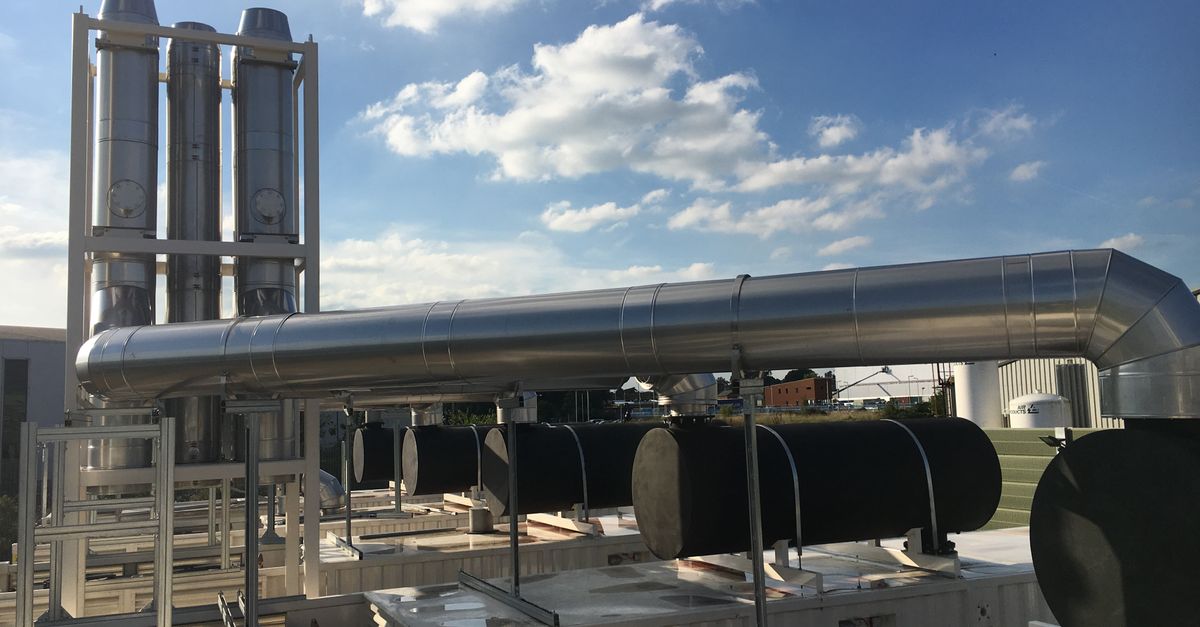
AirTrunk’s valuation reflected more than 800MW committed to customers alongside its future development land. Photo: Renew HQ / Pexels, Pexels licence (free commercial use).
What lenders see, and owners should see too
Lenders are often portrayed as the cautious people who arrive late and ask for spreadsheets. In this case, their caution is unusually instructive.
Fitch Ratings, a credit-rating agency whose criteria influence how lenders judge risk, treats leases exceeding 10 years with established blue-chip customers as stronger than five-to-ten-year agreements. Short leases, unproven tenants and expected market vacancy above 10% are weaker, under its August 2025 digital-infrastructure criteria.
Those are not universal loan terms. They are evidence of what debt providers fear: revenue arriving late, customers leaving, operating costs rising and cash reserves evaporating.
Equity investors ask a related but sharper question: after those risks are paid for, what is left for us?
They test how long their capital is trapped before distributions begin, how much additional equity may be needed if lease-up slips, and whether a future fundraising will dilute their ownership. Dilution simply means existing owners receive a smaller percentage of the company after new shares are issued.
Imagine an illustrative example: a founder owns half a project company, but a missed customer start date creates a cash gap. If a new investor supplies the rescue money in exchange for new shares, the founder may still own shares after the round but a much smaller slice of any eventual gain. That is why the cheapest-looking debt structure can be expensive if it leaves no room for delay.
Before trading ownership for that gap, it helps to understand who gets paid first in growth capital.
GI Network's view: The investable unit is not a completed data centre. It is a completed data centre with power, contracted customers and enough protected cash to survive being wrong about timing.
What to do before the pitch deck goes out
Start with the power agreement. It needs a date, a cost and a clear connection path. Dataplex is the warning against treating this as a post-funding task.
Next, build a capital-to-stability model, not simply a construction model. Separate contingency, interest during construction and lease-up cash. Do not hide them inside a cost-per-MW figure.
Then turn customer interest into enforceable commercial evidence. Record contracted MW, payment start dates, minimum payments, credit support and remedies if delivery slips. Use a fixed-price or guaranteed-maximum-price EPC contract, meaning one agreement covering engineering, procurement and construction, where the project can obtain one. Commission an independent review of budget and schedule.
GI Network would test that proof chain before approaching capital providers: power rights first, then delivery documents, customer contracts, operating assumptions and reserve needs. We would identify the gaps that prevent a lender from underwriting debt and the gaps that would make an equity investor price in delay, dilution or a future cash call. Only then would we map the relevant capital sources and rehearse the objections their investment committees are likely to raise.
The Four-Clock Test
Before calling a data-centre project funded, put four clocks on one page:
- 1.The power clock: When is the connection contractually available, and what does it cost?
- 2.The build clock: When do commissioning and completion tests permit customer delivery?
- 3.The customer clock: When do signed customers begin paying, and how much capacity is contracted?
- 4.The cash clock: How long can the project pay electricity, operations, debt service and reserves if the first three clocks slip?
When all four reach the same date, the project has a chance of becoming stable. When one runs behind, the missing capital is usually not a surprise. It was simply omitted from the first number.
How much does it cost to start a colocation data center?
For a representative 10MW Tier III colocation facility in the UAE, core construction is estimated at US$80–120 million, based on a benchmark of US$8–12 million per MW. Capital required through energisation, commissioning and lease-up is higher: approximately US$135–175 million, including grid connection, contingency, financing costs and working-capital reserves.
How much does building a data center cost?
In the UAE, a published benchmark puts core data-centre construction at US$8–12 million per MW. That suggests US$80–120 million for a 10MW Tier III colocation facility, excluding customers’ servers. This construction figure does not include all costs needed to reach stable income, such as grid works, interest during construction, contingency and lease-up reserves.
How do I finance a data center in the UAE or GCC?
A financeable UAE or GCC data-centre plan needs more than a construction budget. It should establish a credible power connection, customer contracts and funded reserves through lease-up. A representative 10MW UAE model assumes US$135–175 million of capital to stability, covering construction, grid connection, contingency, financing costs and working capital while utilisation builds.
What do lenders look for in a data-center deal?
Lenders need evidence that the facility can generate contracted cash flow after completion, not simply that it can be built. Key factors include a credible power connection, customer contracts stating capacity and commencement terms, minimum payments, power pass-throughs, termination rights and guarantees. They also assess whether reserves can cover operating costs and debt service during lease-up.
What equity do data-center projects need?
Equity requirements vary by project, lender terms, contracted revenue and construction risk. In the article’s illustrative UAE model, US$150 million of total capital is funded with 65% debt, implying 35% equity, or about US$52.5 million. This is a modelling assumption, not a universal equity requirement for data-centre projects.
- Dataplex enters voluntary liquidation after EirGrid denies power contracts at two data-centre sites · Data Center Dynamics · 2022
- Ireland data-centre connection policy requiring matching generation or storage for new connections · Ireland’s regulator · December 12, 2025
- Abu Dhabi’s Khazna unveils UAE’s largest data centre as it expects 850MW capacity by 2029 · The National · October 15, 2024
- MENA Region Data Centre Market Report · Knight Frank · 2024
- Data Centres: The EMEA Report Q2 2024 · Knight Frank · 2024
- UAE Data Centre Market Report · Gulf Data Centre Association · 2024
- Digital Realty 2024 Annual Report · Digital Realty · December 31, 2024
- Project Finance Digital Infrastructure Rating Criteria · Fitch Ratings · August 8, 2025
- AdaniConneX financing announcement · AdaniConneX · April 28, 2024
- WIOCC/OADC expansion programme disclosure · International Finance Corporation · May 13, 2026
- Blackstone announces agreement to acquire AirTrunk · Blackstone · September 2024
- DIGITAL REALTY TRUST, INC._December 31, 2024
- Abu Dhabi's Khazna unveils UAE's largest data centre as it expects 850MW capacity by 2029 | The National
- Microsoft Word - MENA Region Data Centre Market Report - Knight Frank
- GDCA Report 2024- final version - ready to go live - Flipbook by GDCA Marketing | FlipHTML5
- 48053 - WIOCC SLF Loan
- Project Finance Digital Infrastructure Rating Criteria
- UAE 9.9m — Population 99% — Internet Users 5.
- AdaniConneX sets benchmark with construction financing framework of USD 1.44 billion
- 51154 - WIOCC VI Debt
- Blackstone Announces Agreement to Acquire AirTrunk in a A$24B Transaction - Blackstone
Raising capital? Open a capital file and let the advisory team assess your position.
Apply for Capital