
Verici Dx restored trading on 13 October 2026 after raising £8.75 million through a placing and retail WRAP offer during AIM’s new Capital Access Window. Its experience, alongside Tertiary Minerals, GEO Exploration and Invinity Energy Systems, shows that the key variable is not whether a company pauses trading, but whether it enters the pause with an executable timetable, credible disclosure and an acceptable price.
- ·Verici Dx raised £8.75 million and resumed AIM trading on 13 October 2026 after entering the Window on 1 October 2026.
- ·The Capital Access Window has no fixed duration, but Market Abuse Regulation obligations continue while trading is suspended.
- ·By 30 October 2026, 24 AIM companies had used the mechanism, with durations ranging from one to 21 days.
- ·Invinity raised at least £20 million in a three-day Window, but at a 43.5% discount to its pre-halt mid-market price.
- ·Investors accept deep discounts in urgent small-cap raises because the discount compensates them for uncertainty, dilution and the risk of being unable to sell during the process.
- ·No post-reopening share-price performance data for the early cases is supplied in the research brief, so claims that the Window prevents volatility cannot yet be tested.
On 1 October 2026, UK diagnostics developer Verici Dx plc stopped trading on AIM at 7:30am.
The company was not disappearing. It was raising money.
Verici Dx proposed a placing of 4 billion shares at 0.2 pence each to raise £8 million, with an optional £250,000 retail offer alongside it. Twelve days later, on 13 October, it announced that the fundraising had closed at £8.75 million, including a retail WRAP offer. Trading returned at 7:30am.
That is a neat sequence on paper. It is also the first thing many people misunderstand about AIM’s new Capital Access Window. A trading pause may make a fundraising orderly. It does not make it painless.
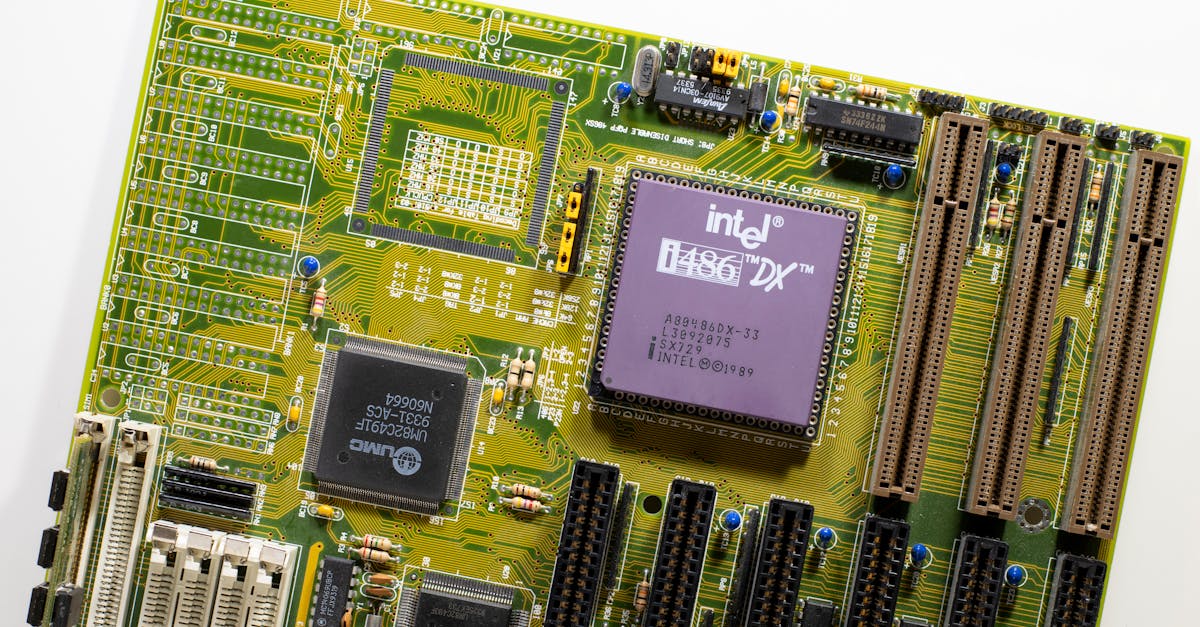
Verici Dx’s October 2026 raise shows how a defined timetable can turn a trading pause into an executable funding process. Photo: Nicolas Foster / Pexels, Pexels licence (free commercial use).
Singer and Oberon supported the Verici Dx transaction. The company had a stated timetable, a fixed issue price and a structure that included both a placing and retail participation. Those details, rather than the suspension alone, gave the process its shape.
Here is the question beneath the announcement: when a small listed company pauses trading to raise cash, does that protect shareholders from a bad outcome, or merely delay the moment the market delivers its verdict?
GI Network's view: A Capital Access Window can protect a fundraising process from disorder. It cannot protect a company from the underlying question investors are asking: why is this money needed, and why should we accept this price?
The pause is not the product
AIM introduced the Capital Access Window through rule changes effective 5 August 2026. It gives an AIM company raising equity a formal route to suspend trading while it runs the fundraising.

AIM Notice 62 formalised the Capital Access Window from 5 August 2026, while leaving execution and disclosure risk with issuers. Photo: George Morina / Pexels, Pexels licence (free commercial use).
At first glance, it looks like a gift to smaller companies. No live share price moving while investors are being approached. Less risk of information leaking in fragments. Time to coordinate a placing, a retail offer and the announcements that explain both.
But the Window does not switch off the rules that matter. MAR, the Market Abuse Regulation, continues to apply. In plain English, a company must still handle price-sensitive, non-public information properly. Its nominated adviser, the firm responsible for guiding it on AIM obligations, must engage if the Window becomes prolonged.
There is no fixed maximum duration in the available guidance. That does not mean duration is irrelevant. By 30 October 2026, 24 companies had used the mechanism. Their suspensions ran from one day to 21 days, with a median of roughly nine days.
What surprised us was how quickly that range reveals the real purpose of the tool. A Window is not a shield against the market. It is a clock. Once trading stops, management has to prove that it knows what happens next.
And when the clock runs long, silence can become its own message.
A nine-day raise and a 21-day question
Tertiary Minerals plc, a UK exploration company, entered a Capital Access Window on 21 September 2026. On 30 September, it completed a conditional placing of 1.667 billion shares at 0.06 pence, raising £1 million. Trading was restored at 7:30am that day.

Tertiary Minerals restored trading within nine days, illustrating the value of a short and intelligible process. Photo: Rastislav Durica / Pexels, Pexels licence (free commercial use).
Nine days. One clear result.
The amount was smaller than Verici Dx’s £8.75 million, but that is not the important comparison. Tertiary had advance planning, clear communication and a timely general-meeting notice. A small raise can still go wrong if the timetable drifts or shareholders cannot tell what is being decided. This one closed before the suspension itself became the story.
GEO Exploration Ltd shows the other edge of the mechanism. According to DMH Stallard’s review of early take-up, the UK exploration company used the Window from 25 August to 15 September 2026, a 21-day halt and the longest among the early users it identified.
The outcome needs careful treatment. The supplied evidence documents the dates and length of GEO’s Window. It does not document the final fundraising terms, the pricing impact or post-reopening share-price performance. So it would be wrong to describe the halt as a success or a failure.
Still, the question is unavoidable. Imagine owning shares in a company that stops trading for three weeks while it seeks capital. You cannot sell. You do not know the final price until it is announced. The longer that period lasts, the more investors have to rely on the company’s updates and its advisers’ credibility.
This is where most people stop looking. They see a suspension and assume risk has been removed because price movement has paused. In reality, the risk has been concentrated into the eventual terms and reopening.
The price that says everything
Invinity Energy Systems PLC, a UK energy-storage company, delivered the cleanest warning that speed is not bargaining power.
It used the Capital Access Window from 19 to 22 October 2026, only three days. It raised at least £20 million. Yet the issue price was 10 pence, a 43.5% discount to its pre-halt mid-market price, according to DMH Stallard’s early review.
Invinity’s three-day Window and 43.5% discount show that quick execution does not settle the pricing question. Photo: panumas nikhomkhai / Pexels, Pexels licence (free commercial use).
Why would investors accept a discount that deep?
Because a small-cap fundraising is not a supermarket sale. New investors are being asked to provide cash when the company needs it, often before the market can react to the final terms. They face uncertainty over how many new shares will be issued, how much existing holders will be diluted and where the shares may trade when the suspension ends. They may also have fewer obvious buyers if they later want to sell.
The discount is their compensation for taking those risks. It is also a signal of negotiating power. If a company has ample time, several credible sources of capital and strong demand, it may resist a harsh price. If cash is urgent or the investor pool is narrow, buyers can demand more protection.
That does not mean a discounted raise is irrational or automatically bad. It may be the practical route to securing cash. But it does mean a three-day Window should never be confused with a three-day solution.
The research brief does not provide post-reopening share-price data for Invinity, GEO Exploration, Tertiary Minerals or Verici Dx. It therefore cannot establish whether any of their shares rose, fell or remained stable once trading resumed. That evidence should be added as it becomes available. Until then, the honest conclusion is narrower: early Window announcements tell us how companies raised money, not yet how the market judged the terms afterwards.
The pattern hiding in the first 24 cases
Put Verici Dx, Tertiary, GEO and Invinity side by side and a pattern appears that none of the individual announcements says outright.
The Capital Access Window separates two jobs that are usually tangled together. It can organise the process of raising money. It cannot improve the company’s position in the negotiation.
Verici Dx had a 12-day timetable, named advisers and a combined placing-plus-retail structure. Tertiary closed in nine days. GEO’s 21 days show why an extended process demands particular scrutiny, even though the evidence does not establish its ultimate market outcome. Invinity shows that even a rapid process can come with a striking discount.
The conventional assumption is that a halt makes financing safer because it stops the price moving. The better way to see it is that the halt postpones price discovery, meaning the market’s process of deciding what a share is worth through buying and selling. When trading returns, the terms of the raise are still there. So is the market’s judgement.
The available evidence does not support broader claims about Australian halt practices or named emerging-market suspensions. Those comparisons may be useful once supported by specific cases and sources. For now, AIM’s own early record is enough to make the point.
What operators should prepare before the bell stops
A board considering a Window should do most of the work before asking for one.
Start with the timetable. Set out the opening announcement, investor approach, proposed retail participation, closing announcement and expected restoration of trading. Verici Dx and Tertiary both show why a visible sequence matters.
Then test the price. Ask what discount investors are likely to require, what that means for existing shareholders and whether the raise still solves the funding need at that price. A board that discovers these answers after suspension has begun has surrendered time when time matters most.
Prepare the disclosure process too. The Window does not pause MAR obligations. Directors need clarity over what information is price-sensitive, who is handling it and what can be said while the raise is live.
Finally, decide whether retail investors are genuinely part of the structure. Verici Dx included an optional retail offer at launch and later completed a retail WRAP element. That is different from adding retail access late, after the meaningful allocation decisions have already been made.
The wider lesson resembles the one in GI Network’s guide to what is the process for applying for funding?. A raise is not a pitch deck with a price attached. It is a sequence of decisions that investors will test under pressure.
What investors should read, not just watch
For investors, the reopening date is not the main event. The terms are.
Read the opening announcement and the completion announcement together. Record the size initially proposed, the final amount raised, the issue price, the number of new shares, any retail element, the advisers and the duration of the Window.
Verici Dx proposed an £8 million placing and an optional £250,000 retail offer, then announced a completed £8.75 million fundraising. That difference deserves attention alongside the final share terms and investor mix.
A fast close can reduce uncertainty. It cannot prove that the price was favourable. Invinity’s three-day process and 43.5% discount make that plain.
Nor is a long close automatically evidence of failure. GEO’s 21-day Window warrants questions, but the supplied evidence does not provide its result or subsequent share-price performance. Investors should resist filling gaps with certainty. Markets are very good at that, usually at the wrong moment.
For anyone assessing stressed or bridge capital, the same discipline applies: judge a transaction by what it costs and what it makes possible next. GI Network examined that tension in the UK rescue-round trap.
How GI Network approaches this decision
GI Network would treat a proposed Capital Access Window as an underwriting exercise before it becomes an announcement. We would test whether the funding amount matches the actual cash requirement, model the ownership effect of plausible issue prices, examine whether retail and institutional channels fit one coherent timetable, and pressure-test the questions a board or investment committee will ask: why this amount, why this price, why now, and what happens when trading resumes. The aim is to identify weaknesses before the Window starts, when they can still be fixed rather than explained away.
The Window Readiness Test
Before requesting a Capital Access Window, use the Window Readiness Test. It has four questions:
- 1.Clock: Can the company name a credible opening-to-reopening timetable?
- 2.Cash: Does the amount raised solve a defined funding need, rather than merely delay it?
- 3.Cost: Is the likely discount and resulting dilution acceptable before investors set the terms?
- 4.Clarity: Can management explain the structure, disclosures and retail access without relying on the suspension to buy time?
If any answer is no, the pause is premature.
That is the lesson of AIM’s first cases. The Window can create breathing room. But breathing room is useful only if the company has already decided how to use it.
What is the AIM Capital Access Window and how does it work?
The AIM Capital Access Window is a formal mechanism, effective from 5 August 2026, that allows an AIM company raising equity to suspend trading while it conducts the fundraising. It can help organise a placing, retail offer and related disclosures without a live market price moving during the process. It does not remove the need for proper disclosure, adviser oversight or compliance with market-abuse rules.
How long can trading be suspended under the Capital Access Window on AIM?
The available guidance does not state a fixed maximum length for an AIM Capital Access Window. In the first 24 uses recorded by 30 October 2026, suspensions ranged from one day to 21 days, with a median of about nine days. A longer suspension does not itself show a successful or unsuccessful fundraising, but it increases the importance of clear updates and a credible timetable.
Does market abuse regulation still apply during an AIM Capital Access Window?
Yes. The Market Abuse Regulation, or MAR, continues to apply throughout an AIM Capital Access Window. A trading suspension does not remove a company’s duty to handle price-sensitive, non-public information properly. Directors need clear processes for identifying inside information, controlling who handles it and deciding what can be disclosed while the fundraising is under way.
Can AIM companies include retail investors during a Capital Access Window?
Yes. Verici Dx used a Capital Access Window for a fundraising that combined a placing with retail participation. It launched an optional £250,000 retail offer and later completed a retail WRAP element as part of its £8.75 million fundraising. Retail access is a matter of transaction structure: including it at launch is different from adding it late after key allocations have been determined.
How quickly have AIM companies been using the Capital Access Window in 2026?
By 30 October 2026, 24 AIM companies had used the Capital Access Window. Their suspensions ranged from one to 21 days, with a median duration of roughly nine days. Examples included Tertiary Minerals, which restored trading after nine days, Verici Dx, which completed its fundraising and resumed trading after 12 days, and Invinity Energy Systems, which used the mechanism for three days.
- Proposed Fundraise and Capital Access Window · Investegate · 1 October 2026
- Launch of Proposed Placing · Investegate · October 2026
- Completion of £8.75 million Fundraising · Investegate · 13 October 2026
- Early take-up of AIM’s Capital Access Window · DMH Stallard · October 2026
- (Re)shaping the Future of AIM: Proposed Changes to the AIM Rules for Companies · AIM / London Stock Exchange materials · June 2026
- Tertiary Minerals Capital Access Window and Conditional Placing announcement · Public Now · 30 September 2026
- Proposed Fundraise and Capital Access Window | Company Announcement | Investegate
- Launch of Proposed Placing | Company Announcement | Investegate
- Completion of £8.75 million Fundraising | Company Announcement | Investegate
- # PART I ## LETTER FROM THE CHAIRMAN OF # TERTIA
- Early take-up of AIM’s ‘Capital Access Window’ - DMH Stallard
Raising capital? Open a capital file and let the advisory team assess your position.
Apply for Capital