
EADB’s 23 September 2026 invitation to co-finance private industrial parks has revived a familiar hope: that capital will follow a good site, infrastructure and government support. The recent record points to a tougher reality. Kenya’s US$1 billion Afreximbank agreements, Uganda’s Lusenke proposal and IFC’s loan to Abyssinia Group all put institutional arrangements, operating credibility and structured obligations alongside physical assets. No published source establishes a single new DFI rulebook for industrial parks. But the pattern is clear enough for promoters to act on: prepare the title, lease, tenant, utility and environmental evidence before the capital conversation begins.
- ·EADB publicly said on 23 September 2026 that it was open to co-financing private industrial-park projects across East Africa. It did not announce a financing approval for a named park.
- ·In February 2026, Afreximbank and Kenya’s government ratified agreements committing US$1 billion towards Dongo Kundu SEZ and Naivasha SEZ II. The published account describes a commitment, not money disbursed.
- ·The Kenya case places lease agreements, government coordination and SEZA oversight alongside infrastructure, showing why a land-first pitch is incomplete.
- ·Uganda’s Lusenke proposal shows the value placed on an operator’s existing park experience and public alignment, even though no DFI financing was announced.
- ·IFC’s US$20 million A-loan to Abyssinia Group shows that industrial lending can consider operational integration and environmental strategy as well as fixed assets.
- ·Developers should make land rights, leases, collections systems and environmental-social documentation part of the investment case, not paperwork produced after investor interest arrives.
On 23 September 2026, Benard Mono, the acting Director General of the East African Development Bank, made a public appeal that many industrial-park promoters will have wanted to hear. EADB was open to co-financing private industrial-park projects across East Africa.
The announcement came with the usual large ambitions: more manufacturing, more regional value-addition, fewer infrastructure gaps. But the important part was buried in the practical implication. EADB was not offering to finance land because it was well located. It was inviting projects that could be partnered with, examined and structured.
That is a different test.
A development finance institution, or DFI, is a public-backed lender or investor expected to support economic development as well as earn a financial return. In EADB’s case, industrial parks are a strategic focus in its 2024-2028 plan, according to The Star. Yet its September statement did not disclose a named project approval, a security requirement or a list of documents that every applicant must provide.
So what should a park developer take from it?
Not, “Capital is available.”
Rather: “The scrutiny is coming.”
The plot twist is not the land
Most industrial-park pitches begin with a map. A port. A highway. A border. Cheap serviced land. Government incentives.
All of that matters. But a park is not a plot of land with roads drawn on it. It is an operating system: tenants occupy space under agreements; utilities are consumed and billed; public authorities grant permissions; the developer needs the right to collect money and enforce obligations.
Imagine you are lending against such a project. Which gives you more comfort: an impressive valuation of empty land, or proof that the developer has enforceable rights, credible tenants, functioning billing arrangements and clear responsibilities with government?
This is where most people stop looking. The site may be excellent. The real question is whether its future income and legal control can survive a dispute, a delayed permit or a tenant that does not pay.
EADB’s announcement matters because it makes the question immediate. The recent cases do not prove that collateral has been abandoned. They do suggest that collateral alone is a weak answer.
Kenya’s billion-dollar lesson
In February 2026, Afreximbank and Kenya’s government ratified agreements committing US$1 billion towards two integrated industrial parks: Dongo Kundu Special Economic Zone and Naivasha SEZ II.
Be precise about that language. The published account says the agreements committed US$1 billion. It does not say the full amount had been approved for drawdown or disbursed.
That distinction is not legal fussiness. It is the whole story.
The reported framework involved lease agreements, coordination with government and oversight by the Special Economic Zones Authority, known as SEZA. These are governance mechanisms, which sounds dull until something goes wrong. Then they determine who is entitled to use the land, who has authority over the project and what a tenant’s rights actually mean.

Afreximbank’s February 2026 agreements committed US$1 billion towards Dongo Kundu SEZ and Naivasha SEZ II, subject to the distinction between commitment and disbursement. Photo: Simon Brandintel / Pexels, Pexels licence (free commercial use).
At first glance, Dongo Kundu looks like a location-and-infrastructure story. It is also a control story. The value of a lease is not the paper itself. It is that a lender can inspect the rights it grants, the obligations it creates and the party responsible when those obligations are broken.
Put that beside a simple land pledge. Land may be valuable, but it does not automatically reveal who may occupy it, whether the promised infrastructure will operate, or how cash will be collected once tenants arrive.
That is why signed documents can still leave closing risks unresolved. A document can establish intent while leaving permits, conditions and execution work unfinished.
In Uganda, the asset was the operator
Two months later, on 19 April 2026, Uganda’s State Minister Evelyn Anite welcomed investor Paul Zhang over plans for a new industrial park in Lusenke, in Kayunga District.
The government’s announcement did not disclose DFI financing. Nor did it offer a completed deal structure. What it did emphasise was Zhang’s existing record: he leads the development of Tian-Tang Mbale Industrial Park, an operating park that has attracted manufacturing tenants from China.

Paul Zhang’s existing operating record at Tian-Tang Mbale Industrial Park was central context for Uganda’s Lusenke proposal. Photo: Frostee Lens Ug / Pexels, Pexels licence (free commercial use).
This is a different kind of evidence. Kenya’s case centres on institutional arrangements around two named special economic zones. Uganda’s Lusenke proposal rests, in part, on the credibility of a developer who has already operated a park.
The lesson is not that a ministerial welcome guarantees finance. It plainly does not. The lesson is that, where the project is new, an experienced operator can reduce uncertainty in a way that undeveloped land cannot.
A lender or investor is asking a basic human question: has this person built and run anything like this before?
That question is especially important for parks because the hardest risks arrive after construction. Tenants need services. Bills need collecting. Rules need enforcing. A road opening ceremony cannot do any of that.
The factory that makes the point without being a park
The third case is not an industrial park at all, which is exactly why it is useful.
On 8 April 2026, the International Finance Corporation disbursed a US$20 million A-loan to Abyssinia Group of Industries, a Kenyan-based steel producer with operations in Ethiopia and Uganda. The funding supports capacity expansion, backward integration, decarbonisation and capacity-building for a green-financing framework.
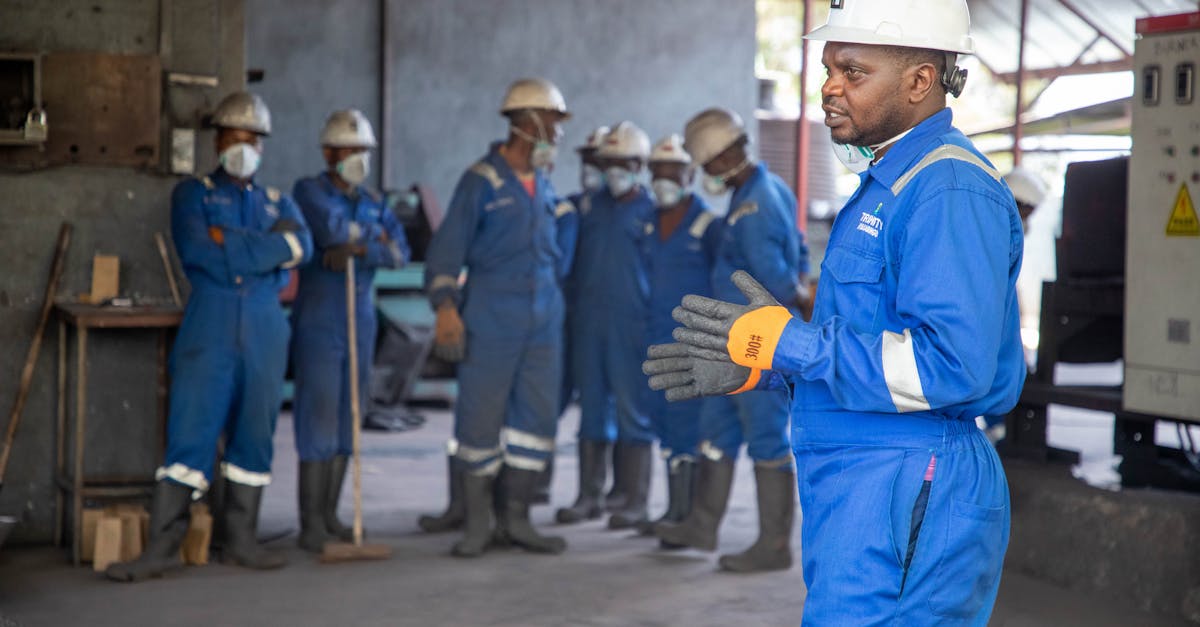
IFC’s April 2026 A-loan to Abyssinia Group combined industrial expansion with decarbonisation and a green-financing framework. Photo: Safi Erneste / Pexels, Pexels licence (free commercial use).
Abyssinia owns industrial assets. Yet the disclosed purpose of IFC’s loan extends beyond those physical assets. It includes how the business integrates its supply chain, expands its operations and manages its environmental direction.
Here is the twist: the strongest recent evidence does not show a universal DFI doctrine saying, “Governance beats collateral.” It shows something more useful. Across Kenya, Uganda and the Abyssinia transaction, physical assets sit alongside arrangements that make an industrial project legible to capital providers.
Leases. Institutional oversight. Proven operators. Operating integration. Environmental planning.
None is glamorous. All are financeable evidence.
What the power projects understood
Kenya’s earlier geothermal and independent power projects, including Lake Turkana Wind Farm and Olkaria III, offer a useful parallel. Their financing structures involved political-risk guarantees, power-purchase agreements and attention to the creditworthiness of the buyer of electricity.
A power-purchase agreement is simply a contract setting out who will buy the electricity and on what terms. Its importance is obvious once you see it: a wind farm may have turbines worth millions, but its lenders still need to know who will pay for the power.
Industrial parks have the same underlying problem in another form. Who pays rent? Who pays for water and electricity? Can charges be measured? Can the operator enforce a lease? What happens if a public approval is challenged?
Lenders finance systems that can keep producing cash, not just structures that look valuable from the road.
GI Network’s view: EADB’s September announcement should be treated as a preparation window. The developer with the strongest chance of a serious capital conversation will be the one that can show how land rights, tenant obligations, utility collections, public authorities and environmental responsibilities are controlled in practice.
What does not follow from the evidence
There are limits to the argument.
The public sources do not reveal the full underwriting files for Dongo Kundu or Naivasha SEZ II. They do not publish tenant pre-lease levels, utility collection records, title opinions or the exact conditions attached to Afreximbank’s commitment. EADB has not publicly set out a universal industrial-park checklist.
Nor is governance a substitute for a viable site, demand or infrastructure. A perfect lease cannot rescue a park with no credible users.
Still, the opposite mistake is common. Promoters treat legal and operational evidence as material for the closing room, after the real pitch has been made. The cases suggest it belongs in the pitch from day one.
The file a park developer should build
Start with the land-rights chain. This means assembling the documents that show who can use, develop, lease and control the site. A single land document is not enough if the proposed tenant model, financing structure or public approvals raise unanswered questions.
Then turn tenant demand into evidence. A pre-lease is a signed commitment from a prospective tenant before a project is fully complete. It is stronger than enthusiasm expressed at a meeting because it identifies the space, terms and obligations that may underpin revenue.
Next comes the unglamorous machinery of collections. If the park intends to charge for water, electricity, waste or maintenance, show how use is measured, how bills are issued and how arrears are handled. Investors do not need a colourful presentation about “recurring revenue”. They need to understand how money gets from a tenant’s operations into the project account.
Environmental and social, or E&S, controls deserve the same treatment. That means clear records on environmental obligations and the project’s responsibilities to workers and surrounding communities. A missing E&S issue can delay a project even when the concrete is ready.
For an operating business choosing a park, these are not only developer questions. Ask to see the lease terms, the utility arrangements, the service standards and the approvals that affect your factory. A site visit tells you what exists today. Documents tell you what will hold tomorrow.
Fund the proof before funding the whole build. In practical terms, early money may need to pay for the title work, technical studies, lease documentation, metering design and E&S preparation that make larger capital possible.
What investors should see before the valuation discussion
Investors often begin with the valuation of land because it is easy to put in a spreadsheet. The more revealing work is slower.
Ask who holds which right. Ask whether leases are executed or still proposed. Ask who invoices tenants and who can act when they fail to pay. Ask what public body has oversight, and what approvals remain outstanding.
A security package means the contractual rights and assets a lender can rely on if the borrower fails to perform. It matters. But it should be assessed alongside the operational controls that keep the project alive before any default occurs.
Experienced investors understand the psychology here. Founders see paperwork as friction because they know the project is real. Lenders see paperwork as proof because they do not have that privilege. Their job is to imagine the moment trust breaks down.
That is why a target list of funders is not a financing strategy. A target list is not the same as real investor access, particularly when the project file cannot withstand the first round of questions.
Where GI Network fits
GI Network would begin by testing whether an industrial-park proposal can be underwritten as an operating system rather than presented as a land opportunity. We would map the title, lease, tenant, utility, public-interface and E&S evidence; identify what is missing; organise a lender-readable diligence file; and rehearse the objections a DFI or blended-capital investment committee is likely to raise. Only then does it make sense to map capital providers or shape the financing structure.
The Four Proofs test
Before seeking DFI or regional-bank capital, use the Four Proofs test:
- 1.Proof of control: Can you show who has the enforceable right to develop, operate and lease the land?
- 2.Proof of demand: Can you distinguish signed tenant commitments from interest and aspiration?
- 3.Proof of collection: Can you show how rent and utility charges are measured, billed and recovered?
- 4.Proof of responsibility: Can you show which public bodies, permits and E&S obligations govern the project, and who owns each risk?
Miss one proof and a park may still be a good idea. It is just harder to finance.
Meet all four and EADB’s invitation begins to look less like a headline and more like an opportunity.
- EADB pushes capital mobilisation to unlock EA industrial growth · The Star · 23 September 2026
- Dongo Kundu SEZ attracts fresh investor interest · Government Advertising Agency, Kenya · February 2026
- Chinese investor set to build new industrial park in Lusenke, Kayunga · Ministry of Finance, Planning and Economic Development, Uganda · 19 April 2026
- Abyssinia Steel · International Finance Corporation · 8 April 2026
- Mobilising Finance for Infrastructure: Kenya Case Study · World Bank PPP Resource Center · 2015
- EADB pushes capital mobilisation to unlock East Africa industrial growth
- Dongo Kundu SEZ attracts fresh investor interest from India | Government Advertising Agency
- Chinese Investor set to Build a New Industrial Park in Lusenke Kayunga District | Ministry of Finance, Planning and Economic Development
- 47118 - Abyssinia Steel
- Kenya leads as EAC in private deals – East African Vanguard
Apply for Capital to package your industrial park opportunity for DFI and blended-finance investors.
Apply for Capital